ERIS Insider summarizes key news items and current trends shaping the work of environmental assessment and due diligence practitioners.
ERIS Insider Sections
IN FOCUS
Provincial and Federal Governments Cooperate to Accelerate Targeted Project Development

The newly elected federal government is pursuing policies intended to accelerate high-priority infrastructure development, including fossil fuels and critical minerals. Among these initiatives, the federal government is expanding cooperation with provinces to streamline environmental assessments.
Coordinating and Accelerating Environmental Assessments
The federal government has signed memoranda of understandings (MOUs) with individual provinces and territories for more than 20 years, agreeing to coordinate or share overall legal authority for environmental assessments, and often in the joint conduct of particular assessments. They cover Canada’s Impact Assessment Act (IAA) (or similar earlier federal legislation) and analogous provincial laws. Since December 2025, the federal government has updated or signed agreements with Alberta, Manitoba, New Brunswick, Nova Scotia, Ontario, and Prince Edward Island. Details vary, but typical terms include:
- Each assessment under the MOU will be completed within two years.
- Governments will recognize and allocate authority:
- Assessment procedures will include coordination with affected Indigenous groups and the public.
- The parties will develop and apply joint procedures to facilitate assessment activities, including procedures to resolve any interagency disputes.
Alberta – Focus on Energy
On April 2, the federal and Alberta governments announced a “Cooperation Agreement on Environmental and Impact Assessment.” The agreement contains terms consistent with the general provisions summarized above. It builds on an MOU signed by the two governments on November 27, 2025, which reaffirms earlier commitments to greenhouse gas management and cooperation with Indigenous and treaty rights, and sets forth ways the governments will cooperate to expand targeted energy development projects. The intention of the MOU is to:
- Increase oil and natural gas production in Alberta to expand exports and enhance the provincial electricity grid, while also reaching carbon neutrality.
- Reduce regulatory overlap to keep permitting and approval times below two years, even for major projects.
- Begin permitting for: new private sector pipeline(s) exporting at least one million barrels per day, with an application by July 1, 2026; major expansions of electricity generation and transmission within and into Alberta (from British Columbia and Saskatchewan); and carbon capture projects.
Both governments commit to cooperate with one another on a range of energy and climate projects, and with Indigenous leaders and other provinces when appropriate.
Ontario – Focus on Critical Minerals
Canada and Ontario signed the “Co-operation Agreement between Ontario and Canada on Environmental and Impact Assessment,” signed on December 18, 2025. The agreement contains terms consistent with the general provisions summarized above.
On March 2, Ontario’s provincial government announced a plan to construct all-seasons roads to the mineral-rich “Ring of Fire”, with construction to start in June 2026 and roads beginning to open in November 2030. This plan incorporates intergovernmental coordination as outlined in the December agreement.
Implications for Environmental Consultants
These agreements are not limited to the sectors noted above, but extend to projects with environmental impacts sufficient to trigger mandatory federal and provincial assessments. Therefore, developers and consultants should consider whether their projects meet the applicable regulatory thresholds and qualify for coordinated and accelerated agency reviews. Potential benefits include:
- Targeted sector opportunities
Accelerated activity in priority sectors will provide expanded opportunities for consultants with relevant technical and regional expertise. Tighter timelines will also require consultants to hone their analytical and project management skills. - Stronger demand with compressed timelines
Clearer and faster procedures should enhance individual projects. With a more defined timeline, the coordinated approach will also make projects more enticing to potential investors and developers, attracting additional resources and creating additional opportunities for existing organizations and those seeking to expand into these markets. - Shift to integrated, multi-jurisdictional processes
“One project, one review” models reinforce the value of thoughtful assessment and review designs and meaningful engagement with governmental and community stakeholders to anticipate and avoid potential pitfalls.
Overall, these streamlined approaches will favour consultants who can operate quickly, collaboratively, and across regulatory boundaries, combining technical depth with strong project integration and management capabilities, and the ability to engage outside stakeholders positively.
Editor’s Note: The Carney government has pursued cooperation with the provinces as part of its wider priority on economic development throughout Canada. This priority includes efforts to construct more government-owned and private sector resource and infrastructure projects, and to accelerate environmental and other reviews required before projects can proceed (see, e.g., “Getting Major Projects Built in Canada – Discussion Paper on Proposed Legislative, Regulatory, and Policy Reforms“). As this newsletter went to press, the Government extended the engagement period for one of these initiatives until July 22 (“Engagement period extended on proposed reforms to strengthen one Canadian economy“), affecting “Strengthening One Canadian Economy through trade and transportation“.
CRE MARKET UPDATE
The Latest Market Trends in the Canadian Commercial Real Estate Industry (Q1 2026)
Generously provided by CBRE Research | CBRE Limited
Key Takeaways:
Investment volumes recorded modest year-over-year gains in Q1 2026.
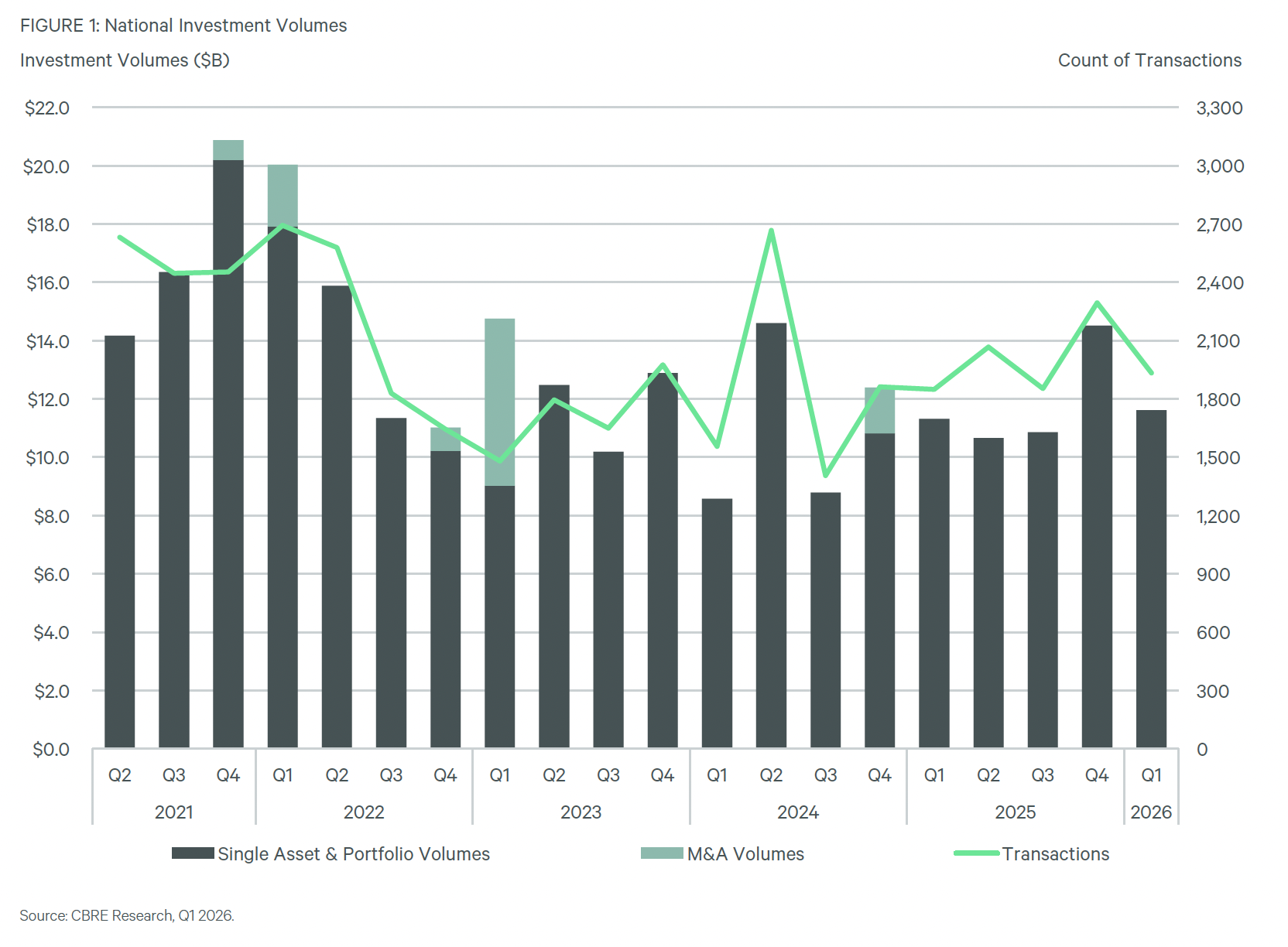
- Canadian commercial real estate investment totaled $11.6 billion in Q1, achieving 20% growth quarter-over-quarter in line with seasonal norms. On a year-over-year basis, investment activity rose 2.6%, reflecting continued steady market recovery. (Fig. 1)
Multifamily led investment activity and office continued to build momentum.
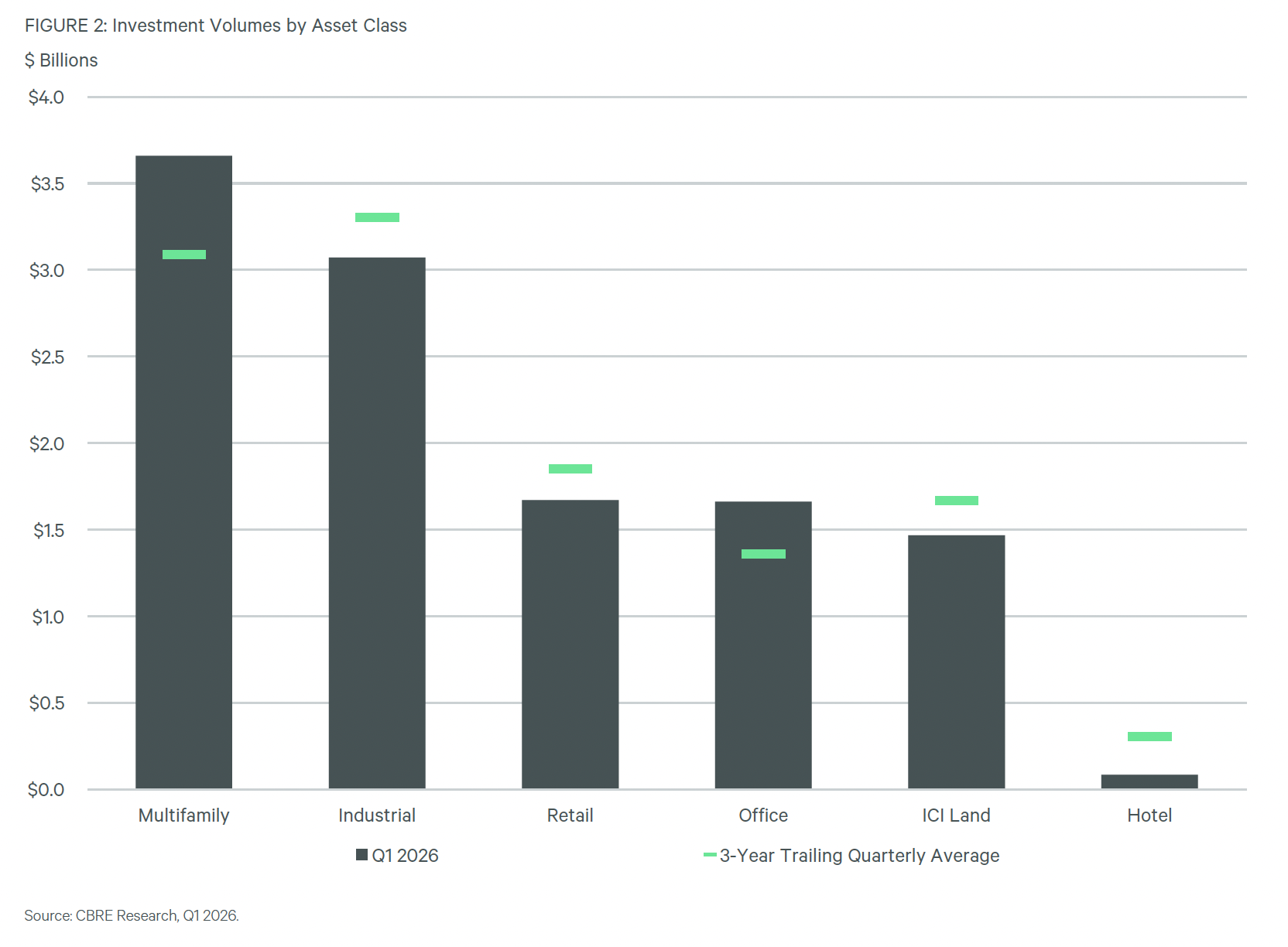
- Multifamily remained the most active asset class at $3.7 billion in Q1 while industrial was the only class to record a quarter-over-quarter increase in volumes of 3.1% to $3.1 billion. Office investment totaled $1.7 billion for the second highest quarterly total since Q3 2023. (Fig.2)
Institutional activity jumped to its highest level in over three years.
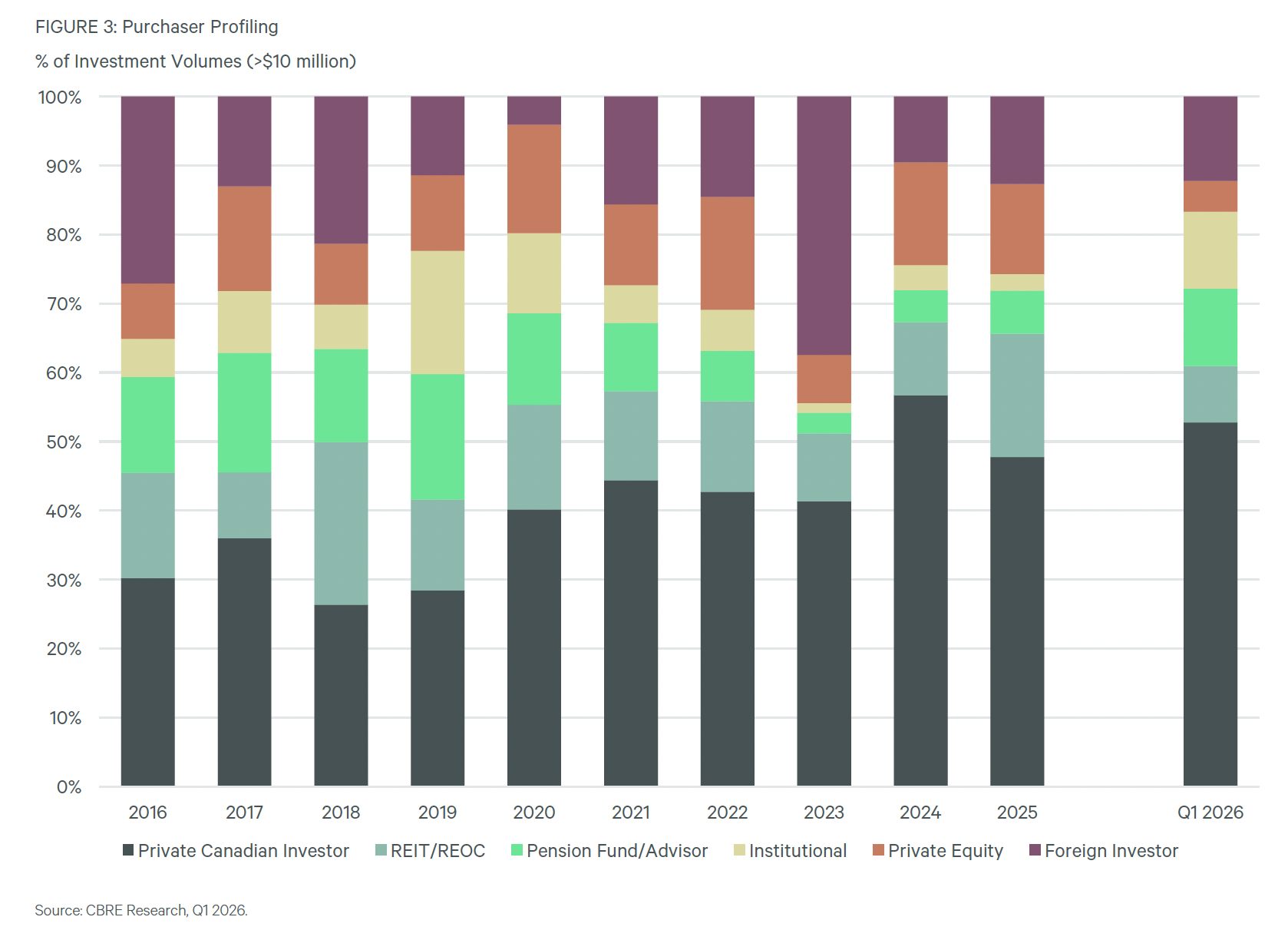
- Private Canadian investors remained dominant, capturing over half of Q1 acquisitions. Foreign investors were the second most active group, boosted by Germany’s DekaBank’s $279 million acquisition of Tour Deloitte in Montreal. Meanwhile, institutional activity rose to 11.2% of purchases for its highest level seen in over three years. (Fig.3)
Investment volumes were mixed across Canadian markets in Q1.
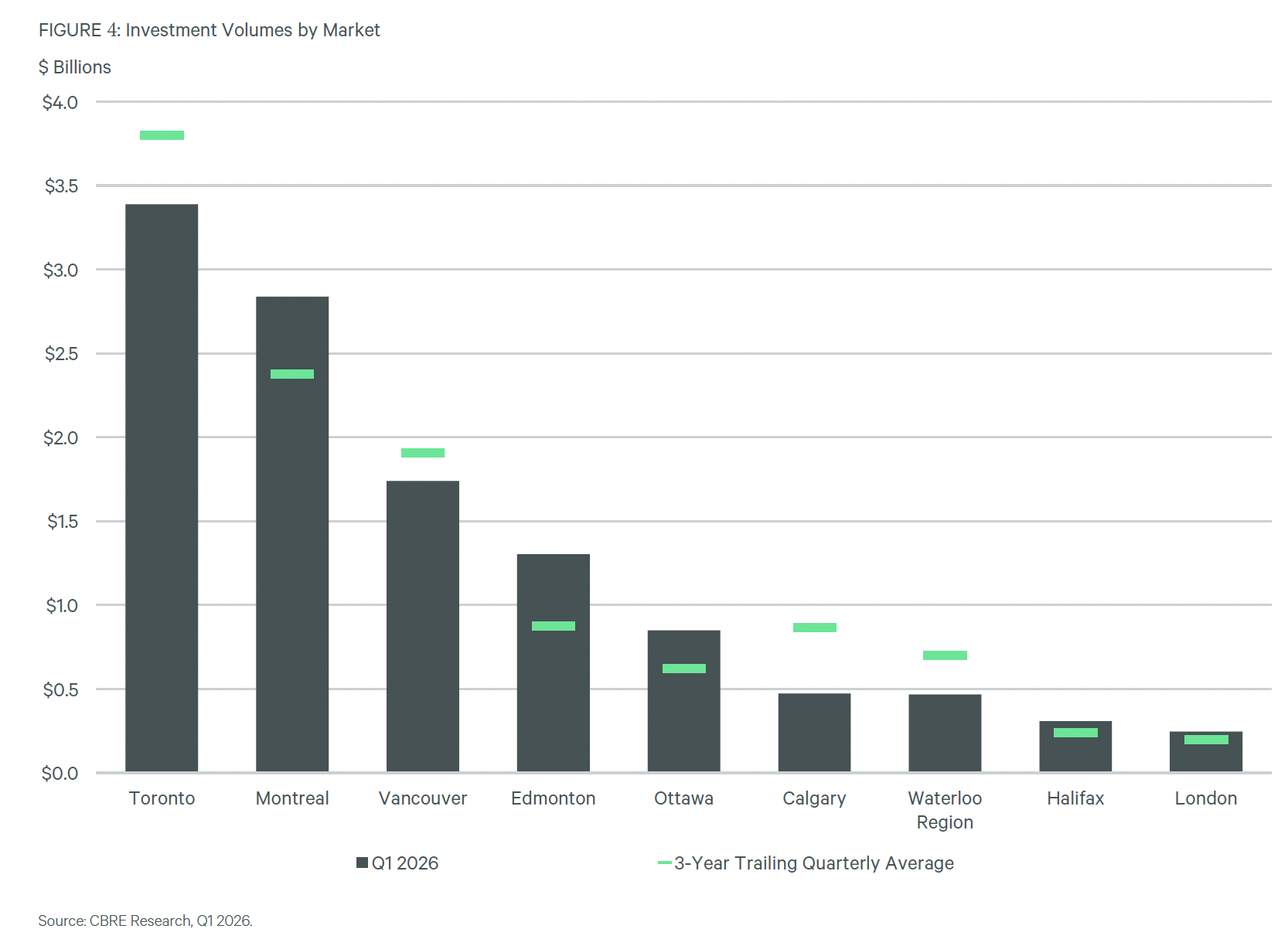
- Five of nine tracked markets recorded year-over-year volume growth in Q1. London volumes more than doubled year-over-year while Ottawa and Halifax also saw notable gains. (Fig.4)
To view larger images and dive deeper into the data, click on the images above.
LATEST DEVELOPMENTS
Canada’s Evolving Approach to Wildfire Risk and Resilience

Canada’s approach to wildfire management continues to evolve as longer fire seasons and more destructive wildfire activity reshape how governments assess environmental and public safety risks. Federal and provincial agencies are moving beyond traditional emergency response models by incorporating climate adaptation and resilience planning into broader policy and infrastructure discussions. This shift reflects a growing recognition that wildfire risk now affects long-term land use, development planning, and the protection of communities and critical infrastructure.
For a more in-depth discussion on Canada’s shift toward stronger resilience and adaptation measures, read, “Wildfire Risk in Canada: Implications for Environmental Due Diligence and Redevelopment.”
Expanded Focus on Preparedness and Coordination
The 2025 wildfire season involved widespread evacuations, extended emergency response efforts, and sustained pressure on firefighting resources across multiple provinces, especially as wildfires affected regions beyond the traditionally high-risk western areas. In response, governments have strengthened coordination across federal, provincial, territorial, and Indigenous emergency management partners while increasing investments in preparedness, risk assessment, and recovery planning.
Current wildfire policy frameworks emphasize mitigation and resilience as core strategies to reduce long-term impacts on communities, infrastructure, and critical services. That includes improved information sharing, more integrated emergency planning, and the incorporation of wildfire risk into land-use decisions and infrastructure development.
Provincial Measures and FireSmart Expansion
Provincial governments like Ontario are investing in wildfire preparedness for the 2026 season by increasing staffing, purchasing firefighting equipment and aircraft, and improving emergency coordination. At the same time, FireSmart programs remain a central component of wildfire mitigation efforts, promoting community resilience and influencing how wildfire risk is addressed in development planning and property management. These measures may create new operational and due diligence considerations for developers, infrastructure operators, and property owners in wildfire-prone areas.
Indigenous Fire Stewardship and Climate Adaptation
Indigenous fire stewardship is also receiving greater recognition within wildfire management frameworks. Controlled and cultural burning practices are gaining greater recognition within wildfire management discussions, particularly in relation to fuel management, ecosystem restoration, and climate adaptation. This reflects a growing effort to incorporate Indigenous-led fire stewardship into contemporary approaches to managing wildfire risk.
Requirements for Archaeological Assessments Continue to Evolve
Where construction and development projects involve lands that may contain archaeological or historical assets, provincial laws and regulations can require assessments in advance of, and sometimes during, development to identify and protect culturally sensitive and historically important sites. Provincial agencies identify the types of locations and projects for which initial assessments are required; further reviews and limits may be imposed. Provincial databases already document many tens of thousands of archaeological sites and historic places that contain these assets, and continue to evolve and expand. At the same time, regulatory frameworks and technical requirements are being modernized and updated. For example, the British Columbia Archaeology Branch (within the Ministry of Forestry) has updated templates for site boundary submissions effective July 1, 2026. In March, Ontario’s Ministry of Citizenship and Multiculturalism proposed revisions to requirements for archaeological assessments conducted by licensed consultant archaeologists. These proposed revisions would clarify procedural requirements for compliance with provincial standards. Developers, consultants, and other project stakeholders across Canada should remain current with evolving provincial requirements and guidelines to ensure compliance and avoid delays in project planning and approvals.
B.C. Issues New Technical Guidance on Groundwater Remediation Strategies
The British Columbia Ministry of Environment and Parks recently introduced new technical guidance regarding the use of attenuation-based groundwater remediation strategies. Effective April 1, 2026, “Technical Guidance 22 – Monitored Natural Attenuation and Enhanced Attenuation for Groundwater Remediation” outlines when attenuation-based approaches may be appropriate following active remediation, particularly where additional active cleanup is impractical, technically infeasible, or cost-prohibitive.
Under the framework, natural physical, chemical, and biological processes may be used to reduce contaminant concentrations and manage long-term groundwater risks when supported by appropriate monitoring and site-specific analysis. Enhanced attenuation measures may also be incorporated to accelerate or support these natural processes.
Additionally, the guidance integrates climate change considerations into groundwater remediation planning, including the protection of potential drinking water sources and the evaluation of long-term environmental vulnerability. This signals a continued shift toward incorporating resilience and future risk conditions into contaminated site management decisions, which may have implications for developers, environmental consultants, and property owners involved in remediation planning and long-term site management across B.C.
REGULATORY DEVELOPMENTS
Quebec Revises Its Environmental Impact Assessment and Review Procedure (EIARP)
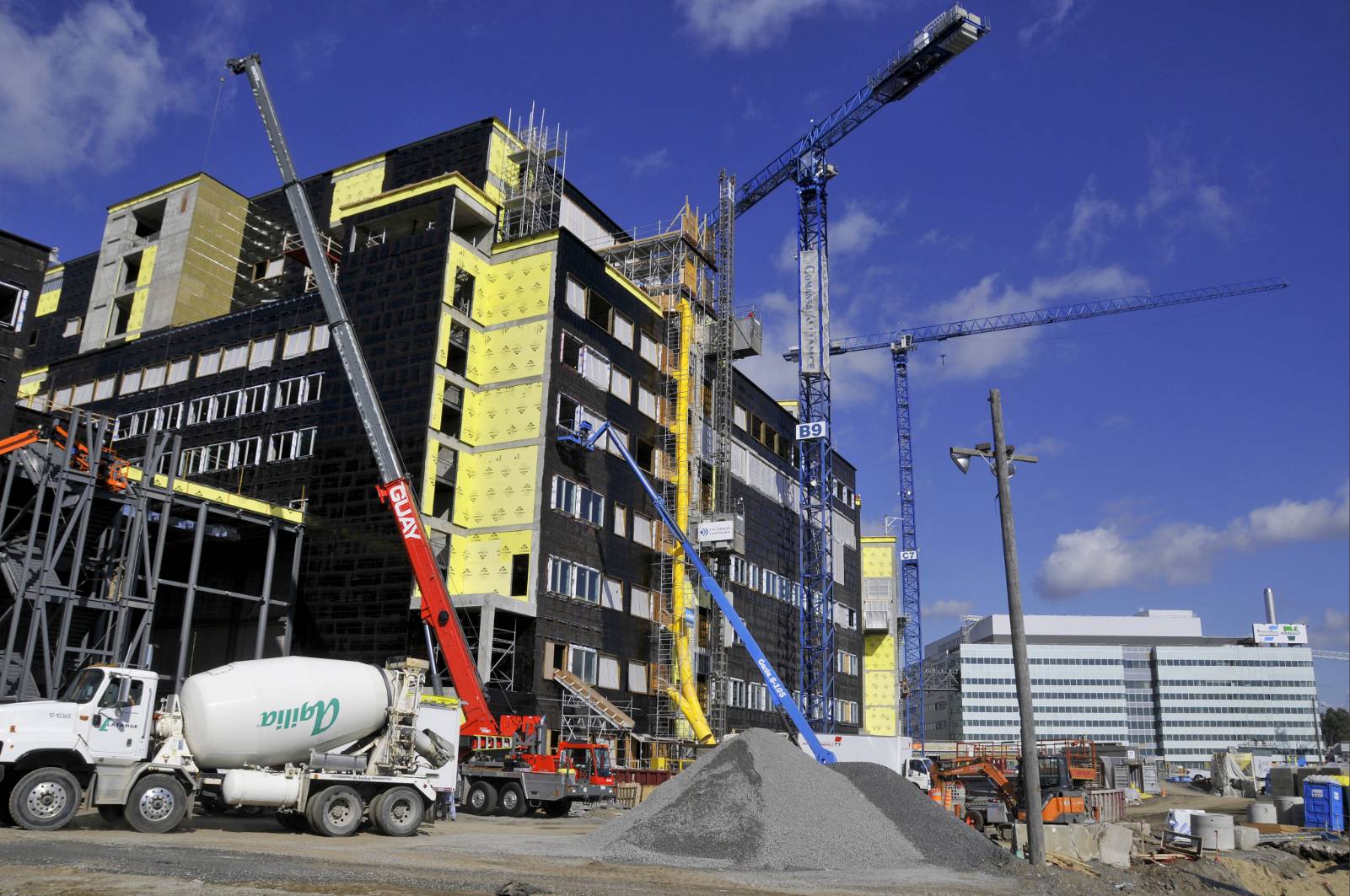
Published on March 25, 2026, and effective December 1, 2026, the Order in Council 368-2026 significantly amends Quebec’s Regulation covering EIARPs (Q-2, r. 23.1) under the Environment Quality Act (EQA). It replaces Divisions I to VII to implement EIARP reforms introduced in 2025 through Bill 81. These amendments specify a more detailed Notice of Intention, requiring the identification of key issues, the proposed content of the environmental impact assessment (EIA) statement, and a projected timetable for preparing and filing the EIA. They also revise rules on public consultations, reimbursing excess financial contributions when impacts are lower than expected, and amending or transferring authorizations. The revised regulation also updates public register requirements and includes transitional provisions for projects already in progress.
New Ontario Excess Soil Reuse Requirements Take Effect in 2027
Beginning January 1, 2027, excess soil that meets applicable reuse standards under the Rules for Soil Management and Excess Soil Quality Standards may no longer be disposed of at landfills or dumps. Limited exceptions will remain for certain landfill operational uses, such as daily cover, final cover, berms, roads, and other ancillary uses, subject to specified conditions and a declaration from a qualified person (QP) confirming that the soil is appropriate for those uses. These and other recent amendments to the On-Site and Excess Soil Management Regulation (O. Reg. 406/19), introduced through O. Reg. 550/24 and O. Reg. 235/25, are intended to improve the management and beneficial reuse of excess soil, recycled engineered aggregate, and stormwater pond sediment in construction and infrastructure projects. Under development since late 2024, many of these final changes were announced in Environmental Registry of Ontario No. 019-9196. These amendments also create conditional exemptions from waste environmental compliance approval (ECA) requirements for certain designated aggregate reuse depots and other specified aggregate reuse activities. Official guidance is available on Ontario’s excess soil management webpage.
Ontario’s New Species Conservation Act Introduces Self-Registry and Reporting System
Proclaimed into force on March 30, 2026, the Species Conservation Act, 2025 (SCA), repeals and replaces the Endangered Species Act, 2007 (ESA), bringing substantial change to the regulated community. The new Act fast-tracks approvals for many previously restricted activities by creating a new Species Conservation Registry and system that allows a qualified professional to certify a new category of “Registrable Activities” (O. Reg. 75/26) by providing registration information, developing conservation plans, and conducting self-monitoring and reporting for Projects that may impact at-risk species or their habitats. Other new regulations under the SCA specify activities (O. Reg. 74/26) that continue to require a permit, while additional exemptions are listed under Excepted Activities – No Permit or Registration (O. Reg. 61/26). Dozens of species previously listed as protected have been removed, relaxing additional restrictions. These changes have raised concerns about weakened critical habitat protections, and legal challenges are underway.
Thank you to STP ComplianceEHS for contributing the articles under State Developments in this edition.

PRACTICE TIP
The Hidden Risk of Limited Regulatory Listings
This edition’s Practice Tip presented by:
Contributing Author: Francesco Gagliardi, CET, LET, QPESA, National Practice Leader – Environmental Due Diligence & Remediation
When undertaking initial due diligence research, the absence of or limited listings within database records does not necessarily mean a site is free of environmental risk. One of the most common pitfalls in environmental due diligence is equating a lack of regulatory listings with a lack of historical impact.
Database searches are inherently limited by the availability, accuracy, and timing of reported information. Many historical activities, particularly those occurring prior to the 1990s, were never captured in publicly-available records. Small-scale or transient operations such as dry cleaners and automotive repair shops, as well as site features like heating oil tanks or informal fill placement, may leave no regulatory footprint, yet still may have resulted in subsurface impacts.
Reliance on database results alone can also cause one to overlook on-site and adjacent property risks. For example, undocumented fill areas, historical grading, or previous site uses identifiable in aerial imagery may indicate potential contamination despite the absence of associated records. Similarly, neighbouring properties with incomplete records can be representative of contaminant migration risks that are not reflected in a “clear” database search.
Another key resource that is often overlooked is property underwriter reports and plans. These documents were prepared for the insurance industry to evaluate operational risks; however, they can also support Phase I ESAs by helping practitioners identify potential environmental concerns associated with historical operations. Often, these records present information that may not be available through other record searches.
A defensible Phase I ESA requires the integration of multiple lines of evidence including historical mapping, aerial photographs, city directories, fire insurance plans, property underwriter reports and plans, site reconnaissance, and interviews, alongside database results. Where data gaps or uncertainties exist, they should be clearly identified and, where warranted, carried forward as potential environmental concerns. In addition, the Canadian Standards Association Group Phase I ESA Standard requires that “reasonably ascertainable” historical and regulatory records shall be reviewed as part of the Phase I ESA process, and failure to do so may constitute negligence if such information is available but not reviewed and indicates a potential risk for subsurface impacts to be present.
Ultimately, “no records” should be interpreted as “no known records,” rather than “no risk.” Recognizing this distinction is critical to managing liability, particularly for lenders, developers, and investors relying on due diligence to inform transaction decisions.
About ERIS Data Collections and Solutions: Since 1999, ERIS has been Canada’s one-stop shop for environmental property due diligence – providing an unmatched breadth and depth of data records from multiple government and private sources, some no longer publicly available. ERIS offers the largest collection of historical products, including aerial photographs, fire insurance maps, city directories, and provides digital applications, as well as, Software as a Service to create efficient workflows.
FEATURED ERIS PRODUCT
Interactive Historical City Directory Mapping
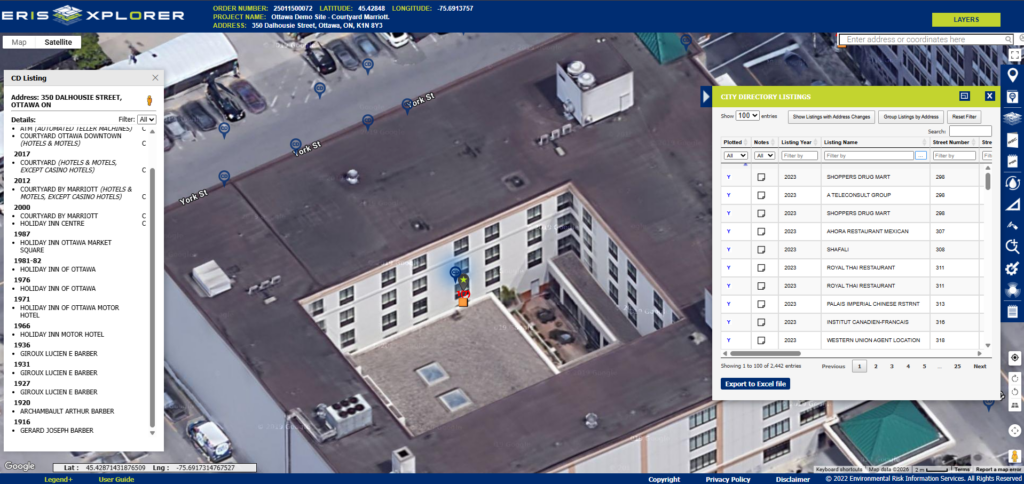
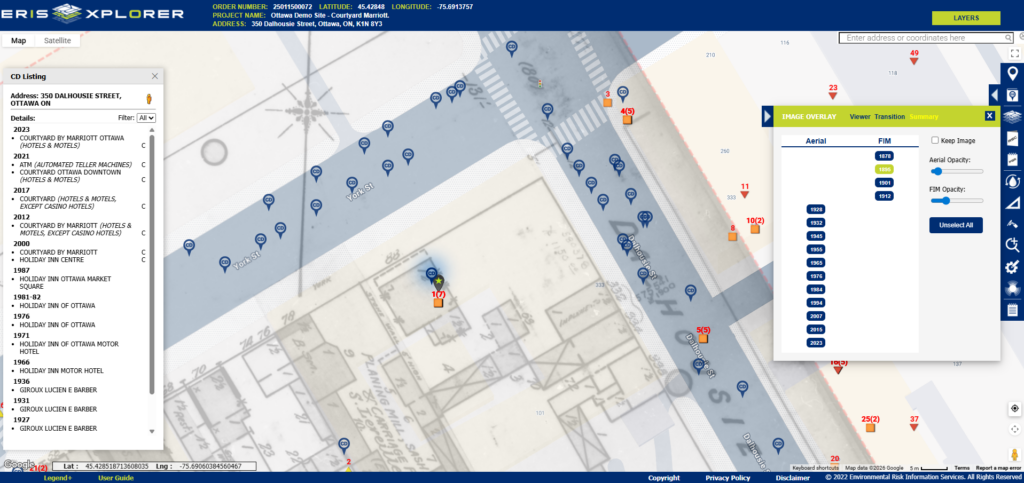
City Directory historical data is now available within Xplorer through an interactive, searchable map interface. City directories are valuable historical data sources for identifying past occupants of buildings over long periods of time. This new functionality enables environmental consultants to investigate property history more efficiently, validate findings, and support reporting.
The City Directory layer allows users to:
- Visualize listings spatially alongside other datasets and historical imagery, including aerial imagery, topographic maps, and fire insurance maps
- Filter and search records by multiple attributes, including distance, direction, and address, and add notes as needed
- View consolidated address histories in a single detail window, organized by year, with the option to expand content into a side panel for easier review and multitasking
- Access Street View directly to further examine and confirm locations
- Export data to Excel and upload to Scriva, with results organized by directional relationship to the subject property
This feature provides a structured way to review and contextualize historical directory information, supporting a more complete understanding of past site activity. Learn more.
For more information, please contact your Regional Account Manager.
SPOTLIGHT ON
Special Profile: Melissa Tran, Regional Account Manager, Eastern Canada

Melissa Tran
Regional Account Manager, Eastern Canada
Since joining ERIS in November 2024, Melissa has quickly become a valued member of the team, bringing enthusiasm and a strong foundation from her background in lab sciences. After coming across the opportunity and applying, Melissa immediately connected with the organization’s collaborative, client-focused culture, something that has only deepened over time. The transition into her current role felt seamless, thanks to the transferable interpersonal skills and professional network she built in her previous field. One of her biggest takeaways so far has been the importance of cultivating strong relationships with colleagues and clients as a cornerstone of success.
Melissa’s day-to-day is anything but routine; it often involves face-to-face client interactions, project support, and training teams on how to get the most out of ERIS’ offerings. This variety keeps her energized and engaged, while also giving her the opportunity to connect with a wide range of people. She’s learned to expect the unexpected in a client-facing role, whether it’s navigating a surprise technology glitch or laughing off a slip of the tongue, moments she says make the job all the more enjoyable and remind her not to take herself too seriously.
She says the people around her are her favourite part of the job, describing the team as supportive, knowledgeable, and genuinely invested in one another’s success. This spirit extends to the company’s culture, where collaboration and personal connection, whether through shared wins or learning to make Irish soda bread, are encouraged and celebrated.
Known for her positive attitude, collaborative mindset, and natural ability to build relationships, Melissa brings both professionalism and approachability to everything she does. Outside of work, Melissa enjoys staying active year-round, from snowboarding and volleyball to spending time on the golf course, and is always ready to embrace the next adventure.










UPCOMING EVENTS

June 23, Vancouver, BC: Join Jasmeen Jatana at the EMA of BC Awards.
July 14, Red Deer, AB: Join Mike Seifert at ESAA’s Mixer.
July 22, Milton, ON: Join Team ERIS at ONEIA’s Golf Day.
August 20, Surrey, BC: Join Jasmeen Jatana at the EMA of BC Annual Golf Tournament.
September 24, Toronto, ON: Join Team ERIS at the Excess Soils Symposium.
October 14-16, Banff, AB: Join Team ERIS at ESAA’s RemTech.
October 20-22, Cambridge, ON: Join Melissa Tran at AESAC’s Phase I ESA Training Course.
November 17-19, Calgary, AB: Join Mike Seifert at AESAC’s Phase I ESA Training Course.
November 24, Toronto, ON: Join Team ERIS at The Brownie Awards.
November 25-26, Calgary, AB: Join Mike Seifert at CANECT WEST.
Thank you for reading this issue of ERIS Insider quarterly newsletter.
Our next issue will drop in November.