
Join our free webinar
What does “defensible” or “risk-resistant” data mean in environmental due diligence? Beyond simply ‘being provided data’, the goal and true value is to reduce the risk of liability by relying on data that is consistent, transparent, and backed by rigorous processes. Join ERIS experts and users/practitioners of environmental risk and property data for a practical, experience-driven discussion on what makes data truly defensible, why it matters, and how organizations can improve confidence in their environmental assessments.
By attending this webinar, participants will:
- Understand what “defensible data” truly means in environmental due diligence
- Recognize the limitations of relying on data access alone
- Identify the key pillars that ensure data integrity and reliability
- Learn how data collection, processing, and QA/QC practices impact outcomes
- Gain practical criteria for evaluating data providers and solutions
- Increase confidence in making risk-based environmental decisions

Srishtee (Tina) Appadoo, EP
Director, Research & Data, ERIS
Tina joined ERIS in 2016 as a data analyst. With a background in environmental geoscience, she was a volunteer GIS technician at the University of Toronto before joining the team. Her dedication and drive have propelled her into roles of greater responsibility at ERIS. Recently promoted to Director of Research and Data, she leads the team that ensures ERIS delivers the most accurate data and provides valuable support for clients. Tina works closely with her team to enhance the data processing pipeline and upholds the highest standards. Tina approaches her work enthusiastically, “every day is a new day, and there is never a lack of interesting work for us.”

Albert Ho, P.Eng, MBA
Senior Director Environmental Programs, First Capital REIT
Albert Ho is the Senior Director, Environmental Programs with First Capital REIT for 12 years. He provides direction and leadership to manage environmental risk nationally. Albert has over 20 years of experience in the field of environmental risk management, investigation and remediation. His experience includes both working as an environmental consultant and working in industry including real estate and manufacturing. Albert enjoys learning and is very open to new ideas. He is also a Sessional Lecturer for the Graduate Department of Physical & Environmental Sciences at University of Toronto Scarborough teaching Contaminated Sites Remediation to students of the Master of Environmental Science Program.

Trevor Janzen, P.Geo, C.Chem, QPesa
Manager, Client Development and Senior Project Manager, Terrapex
Trevor joined Terrapex in 2023, serving as the Manger of Client Development, a Senior Project Manager and a Key Client Account Lead. Trevor brings over 25 years of environmental site assessment, remediation and risk management, vapour intrusion and excess soil experience in the environmental consulting industry at hundreds of sites in Canada.
Trevor has served as the National Portfolio and Program Director and single point of contact for several large national developer and real estate clients, and multi-property portfolios in Ontario and throughout Canada. Trevor also has experience leading national strategic planning and vision setting and providing operational leadership. Trevor is focused on providing practical and useful technical advice that is geared toward helping clients successfully achieve their business and organizational objectives. Serving as the Manager of Client Development for Terrapex for all service lines and offices in Ontario, Trevor provides direction and strategic leadership to Key Client Account Leaders and Service Line Managers in the development and implementation of client relationship building strategies to increase revenue for the company.
Trevor holds a B.Sc. in Environmental Science from Brock University. Trevor is a licensed professional geoscientist (limited), a chartered chemist, and qualified person for environmental site assessment (QPESA) in Ontario.
Moderator

Diana Saccone
Chief Operating Officer & Chief Technology Officer, ERIS
For over 27 years, Diana has helped guide the company’s growth from a Canadian startup to a leading provider of environmental data and technology solutions supporting environmental due diligence across North America. Throughout her career, she has championed the creation of leading-edge products and scalable SaaS solutions, while leading day-to day operations and continued growth and expansion. Diana is passionate about leveraging technology, data, and innovation to improve business performance, enhance customer experience, and support informed decision-making in environmental due diligence. She holds an Honours BA in Environment & Resource Management from the University of Toronto, a Certificate in Applied Digital Geography & GIS, and an Executive Leadership Certificate from the University of Toronto Rotman School of Management.
Diana Saccone: Welcome, everyone. Today is our second webinar in the ERIS Unpacked webinar series. Today’s discussion focuses on defensible data and explores why trusted, reliable environmental data is essential to sound due diligence.
Over the next hour, we’ll look at how data quality, traceability, transparency and historical context can help consultants and property stakeholders identify risks earlier, avoid costly surprises and support better decisions.
Joining me today is Tina Appadoo, our Director of Research and Data. Tina leads our data teams and oversees the processes behind our data standards.
We also have Albert Ho, Senior Director of Environmental Programmes at First Capital. Albert brings more than 20 years of experience in environmental risk management.
Finally, we have Trevor Janzen, Manager of Client Development and Senior Project Manager with Terrapex. Trevor brings almost 30 years of environmental consulting experience.
To set the stage for today’s discussion, Tina will explain why trusted and reliable data matters and how ERIS works to make environmental information transparent, consistent and comprehensive.
Tina, over to you.
Tina Appadoo: Thank you, Diana.
Today, I’ll be talking about ERIS’ approach to defensible data and how we ensure it.
Defensible data is data that supports a qualified person’s judgement.
At first glance, the work we do at ERIS can be described as a straightforward process involving data research, data collection, data processing and quality assurance and quality control (QA/QC).
Although this is true, much of our work is actually driven by the challenges and flaws of real-world data.
At ERIS, we have a dedicated team for each part of the workflow, working to address data issues that could ultimately become liabilities in the environmental due diligence process.
But what do we mean by flaws in real-world data or data issues?
When working with multiple sources at once, challenges can include determining where records come from and when they were last accessed, as well as dealing with data degradation, such as the loss of essential details, including location information and contamination details.
There can also be inconsistencies in location information.
For example, when we receive data from a website, we would typically expect to see a business or site address corresponding to the property. However, as records are updated over time, that information can change. The business or site address may be replaced with a residential address or even redacted altogether.
We also encounter inconsistencies within the same data, such as site coordinates that do not correspond to the listed site addresses.
Other challenges include inconsistent data structures, discontinued inventories or programmes that may involve changes in data ownership or even the loss of information.
We also deal with segmented data updates, interrupted access to online tools, non-digitised historical records and emerging contaminants that fall outside the standard scope of available information.
All of these issues can create data gaps and result in wasted resources, including time and money.
Why does this matter?
One word: Liability.
A data gap, an incorrect coordinate or an undisclosed change in a data source does not remain just a data problem. It can become a liability problem.
A missed contamination source in a Phase I ESA can have financial and legal consequences. At ERIS, our work is focused on ensuring that a data issue does not turn into a liability.
Transparency involves more than simply documenting and disclosing information. It also means taking a proactive approach to minimising data gaps and data degradation before information reaches our clients.
We have a process that is repeated with each update, and the first step is detecting data issues.
These issues can include dropped accounts, redacted fields, missing fields, questionable site coordinate information, data truncation, changes in location information and missing line details, to name just a few.
Once a data issue has been identified, we investigate its cause and try to resolve it. Whenever possible, we work directly with the agency or original source. If that is not an option, ERIS works internally to resolve the issue.
Consistency is another important part of defensible data.
When you’re working with more than 2,000 databases on a regular basis, consistency is essential.
We need a robust workflow that ensures the results remain consistent and do not depend on who handled the information.
Regular database reviews and data updates are also important. When sources are reviewed on a set schedule and each update is compared against the previous one, changes and data degradation can be identified early in the process.
We also have dedicated teams trained to identify data issues at every stage, rather than waiting until the end of the process. This allows problems to be addressed where they begin.
Maintaining strong relationships with agencies over the years also enables smooth and timely communication. This helps us resolve data issues at the source, benefiting both ERIS and all clients accessing the information.
Data governance is another important consideration.
At ERIS, we value documenting how data is sourced, logged, processed and retained. Each decision is recorded and carried forward to ensure traceability and transparency.
We also maintain consistent communication with our clients.
Whenever there are limitations in the data, we communicate what the source does not cover. For example, we explain when there is a data gap, when information has limitations or when there has been a change to the data or its ownership. This allows clients to understand those limitations within their reports.
Together, these factors allow us to deliver consistent data.
Another way we work towards providing comprehensive data is by proactively researching potential contaminants of concern in a rapidly changing regulatory landscape.
Emerging contaminants, such as PFAS, are an example of how delays in regulatory developments can lead to data gaps.
At ERIS, we took the initiative to research and compile our own proprietary databases by identifying sites with potential handling or release of PFAS substances using information from Canada’s National Pollutant Release Inventory.
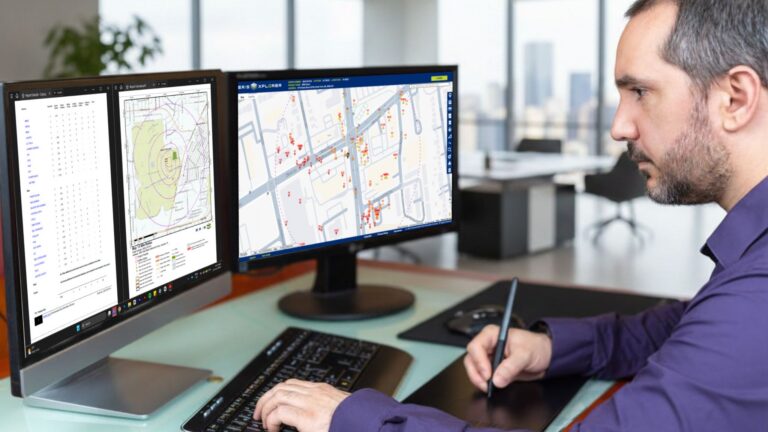
Finally, to bring all these elements together, ERIS developed ERIS Xplorer, a well-curated tool that provides access to different layers of information in one place.
Our most recent addition provides access to City Directories as a map layer for environmental due diligence.
Ultimately, defensibility is not simply about having access to data. It’s about trusting the processes, standards, quality controls and transparency behind that data.
Diana Saccone: When you receive information about a site, what are one or two factors that cause you the most concern?
Albert Ho: That’s probably a very appropriate question for a client to answer. Simply put, the answer is surprises.
Environmental surprises are what stress us out the most because they’re never good surprises. It’s not like a surprise party!
Tina mentioned in her presentation that agencies and provincial data sources sometimes drop records, perhaps because their retention policies differ from what is required for an environmental assessment or a Phase I ESA.
Sometimes records are also dropped because of privacy issues.
How important is that information to your investigation of a property’s history?
Trevor Janzen: We need all the records.
I’m very happy that ERIS maintains historical data.
As Tina mentioned, we understand that the TSSA may delete records when an underground storage tank (UST) was removed in the 1990s. However, tanks that have been delisted are not removed from ERIS’s database records.
I think that’s really important because we need to make sure that all tanks that were previously present at a site are included in the summary.
Diana Saccone: Thank you. Trevor and Albert will now share a real-world perspective on some of the challenges surrounding data reliability, how defensible data informs environmental due diligence decisions and what their experiences reinforce about the importance of reliable data and processes.
Albert and Trevor, over to you.
Albert Ho: Thank you, Diana.
I hope everyone can see our screen. My hope is that you’ll find this case study interesting. It’s a real-world example of a project that Trevor and I worked on together.
We’re going to present it in a conversational style. You may have seen this approach in other presentations, but I hope you’ll enjoy following our candid dialogue.
I’ll play the role of the client, which is the fun part, I think, and Trevor will play the role of my trusted consultant.
Hopefully, you’ll find that this case study isn’t entirely straightforward. There will be some twists and turns, so get ready to hold on tight!
Here we go.
Hey, Trevor, I have a business challenge for you.
I have an automotive service centre tenant at one of our shopping centres who no longer wants to take responsibility for chlorinated solvents. They’ve caused the tenant to change their mind.
Trevor Janzen: That’s surprising.
Albert Ho: Well, I’ve talked to you about this site before, and I know you have a good memory, so I’ll give you a few hints.
This is confidential, right? I know there are a lot of people listening on this call, so let’s start with this: the property is an open-air shopping centre with a large grocery store and a retail anchor. It’s in Canada, on that street.
Trevor Janzen: That sounds like someone’s last name.
Oh, I remember that site. There was an automotive repair garage where they had been performing maintenance, such as cleaning brake lines, for almost 30 years. They were probably cleaning automotive parts with degreasers as well.
Albert Ho: That’s the one.
Let me zoom in a little more.
Here we have the automotive service centre. Unfortunately, we have three monitoring wells with exceedances. Based on my understanding, the most likely sources are the waste chemical storage tank, which is owned by the automotive service centre, and the tenant’s operations.
Trevor Janzen: Seems pretty straightforward.
Albert Ho: Yeah, it seems pretty straightforward, Trevor.
All right, good. So far, so straightforward. But let’s get ready for a few twists and turns.
Here’s the first twist.
The tenant’s consultant completed a Phase I ESA, and the report says there was a former dry cleaner at this property.
Can you help me find out if this is true?
Trevor Janzen: Sure. Let me take a look at that last report.
That’s strange. I suppose the chlorinated solvent contamination in the groundwater could have come from a dry cleaner.
Wait a minute. What is that other consultant thinking?
We only see breakdown products like cis-1,2-DCE and vinyl chloride. There are no parent products like PCE or TCE.
Albert Ho: I know. I’m completely on the same page as you.
But there’s one more challenge.
The current building layout is not the same as it was in the past. It looks like the historical dry cleaner would have been located in the space currently occupied by a retail store.
I hope we don’t have to drill inside the retail store because, as you know, tenants really dislike the disruption that drilling work causes to their businesses.
Trevor Janzen: Oh, absolutely.
Albert Ho: Did the previous Phase I report identify a dry cleaner?
Trevor Janzen: No. Our most recent Phase I ESA report was completed about seven years ago, and it never mentioned anything about a dry cleaner.
This is the first time I’m hearing about a historical dry cleaner that was never documented before.
That’s strange.
Let me open the previous Phase I ESA reports for the site and see if there is any other evidence of a dry cleaner.
Historical title searches? Nothing.
Street directories? Nothing.
Fire insurance plans? Nothing.
Albert Ho: That’s right. I took German in university, and I’m also part German.
Trevor Janzen: We don’t need another Phase I ESA, but I will speak with ERIS about the issue and see what other information we can obtain to supplement what we already have.
Albert Ho: Fantastic.
I know one other word in French, and it’s super important when it comes to real estate and identifying environmental risk: nettoyeur, which means dry cleaner in French.
Trevor Janzen: Honestly, I wish I knew more French.
Albert Ho: Wow, your French is pretty strong, Trevor.
Trevor Janzen: I have to say, ERIS provided some property underwriter reports and site plan reports prepared by insurers.
There was no dry cleaner.
It was a drop-off depot, which means the clothes were sent off-site to be cleaned.
Albert Ho: A drop-off depot. That’s great news!
This may surprise you, Trevor, but I don’t always get good news from my consultants.
I’m going to let the tenant know.
Trevor Janzen: Yeah, absolutely. I’ll let the tenant and their consultant know as well.
Albert Ho: I’m sure they’ll be willing to take responsibility for the contamination.
I’ve just sent them an email, so let’s hold on for a moment. They’re usually pretty responsive.
Oh, I’ve received their response.
Now I understand why they responded so quickly.
They said no. They’re not convinced.
The tenant’s consultant says it could have been a dry cleaner before it became a drop-off depot.
What do you think?
Trevor Janzen: Well, that tenant’s consultant is a Blumenkohlkopf.
That means cauliflower head in German!
Taking German classes at university with two of my friends was like attending a school of insults. I learned how to put different vegetables in front of the word “head” to create insults.
But seriously, there’s no evidence to suggest it was a dry cleaner. There is evidence to show that it was a drop-off depot.
The ERIS Waste Generators Summary Database report indicated that no waste had been disposed of by any alleged dry cleaner at the property.
Going back to the chemistry, during the Phase II ESA, we found no parent products like PCE or TCE to suggest that there had been a dry cleaner.
The Property Underwriter report also indicated that the unit occupied by the drop-off depot was only 595 square feet.
That’s about the size of my recreation room.
I have three teenage boys, and there’s barely enough room to fold the laundry in that space, let alone accommodate dry-cleaning equipment and one of those fancy garment carousels that twirl around.
There was no evidence of waste from a dry-cleaning operation either.
It was a depot. The space was small, and the records identified it as a depot. That’s what it was.
Albert Ho: This is great, Trevor.
Let’s formalise these findings and the multiple lines of evidence you’ve just mentioned into a letter report, and I’ll share it with the tenant.
Wish me luck!
But before that, I have one final question.
Will you recommend drilling inside the retail store because of the discovery of a former dry cleaner?
Trevor Janzen: My recommendation is no.
No additional Phase I or Phase II ESA is needed.
There are several important takeaways from this example that show how we can resolve an issue without conducting an intrusive investigation.
First, new records about a possible dry cleaner uncovered in 2025 revealed potential environmental issues that had not been identified in 2019, six years earlier. This highlights the importance of updating outdated assessments.
This is why consultants, lenders and provincial regulatory agencies require new reports when older reports become outdated.
Second, further investigation confirmed that the site was not an operating dry-cleaning facility. This helped avoid unnecessary intrusive drilling inside the retail space, reducing costs and minimising disruption to tenants and their operations.
Third, ERIS records, including fire insurance plans, property underwriter reports and site plan reports, help identify and prioritise areas with the greatest potential environmental risk. This improves efficiency and increases confidence in the results.
Fourth, even when consultants are working with the same data, they may still disagree.
The best consultants bring together multiple lines of evidence, including historical records and previous assessments, to develop practical and defensible recommendations.
Finally, better information leads to better decisions.
As most clients, like Albert, don’t appreciate surprises, it’s important to communicate early and often about previously unidentified risks revealed by new records.
When clients have a clearer understanding of environmental risks, they’re in a much stronger position to make informed decisions based on their business priorities and risk appetite.
Albert Ho: All right, Trevor. Thank you for those key takeaways. I think we’ll pass it back to Diana.
Diana Saccone: Thank you both.
That was great. Thank you for bringing these issues to life and showing how data quality can directly shape environmental due diligence decisions.