ERIS Insider summarizes key news items and current trends shaping the work of environmental assessment and due diligence practitioners.
ERIS Insider Sections
IN FOCUS
Expanding Federal Efforts to Expedite High-Priority Projects

In our last ERIS Insider, we highlighted federal-provincial cooperation to streamline environmental assessments. In its second year, the Carney government continues to push initiatives that accelerate high-priority infrastructure development, including electrical transmission, energy, and critical minerals projects. These initiatives are part of Canada’s “one project, one review” approach. The goal is to expedite major projects by allowing federal agencies to collaborate with each other, and with appropriate provincial and Indigenous governments, through a single assessment process. Removing duplicative assessment requirements is expected to reduce regulatory delays and improve permitting certainty.
Implementing the One Canadian Economy Act
One of the Carney government’s first infrastructure-building enactments was the Building Canada Act (enacted as part of the One Canadian Economy Act (Bill C-5)), which received Royal Assent in June 2025. The Act is designed to streamline federal review and approval processes, including efforts by the newly created Major Projects Office (MPO), to lead efforts to designate National Interest Projects (NIPs) and facilitate their development. As of October 31, 2026, the government has listed 21 NIPs encompassing electricity and energy, infrastructure and transportation, and energy and mining.
Expedited Permitting for Major Energy, Infrastructure Projects
Canada has also amended its Physical Activities Regulations under the Impact Assessment Act (IAA) to streamline federal permitting and accelerate approvals for major energy and infrastructure projects. Effective September 3, 2026, the changes remove several project categories from the IAA Project List, eliminating overlapping review processes and consolidating assessments under the Canadian Energy Regulator Act (CERA).
The amendments primarily affect international and interprovincial pipelines and electrical transmission lines, certain offshore renewable energy projects, and specified oil and gas facilities regulated by the CER. These projects will generally be assessed under the CERA rather than overlapping IAA and CERA review processes. The amendments also remove certain in situ oil sands extraction facilities and fossil fuel-fired power generating facilities from the Project List.
The changes do not eliminate all environmental review or permitting obligations. Projects remain subject to applicable federal and provincial requirements, and the CER’s review framework continues to consider environmental effects, cumulative impacts, health and socioeconomic factors, and impacts on Indigenous rights. Consultation and public participation requirements also remain relevant.
The Building Canada Strong Act
On September 21, the Carney government introduced the Building Canada Strong Act (Bill C-39), to make controversial changes that will simplify and accelerate governmental reviews of a wide variety of infrastructure and energy projects – short-handed as “One project, one decision, in one year.” This legislation would further revise the IAA, with specific, corresponding amendments to environmental and management laws. As introduced, these changes:
• Establish a one-year timeline for federal regulatory decisions on projects after proponent filings and Indigenous consultations are complete.
• Assign responsibility and authority for certain projects to a single expert federal project assessor (e.g. Impact Assessment Agency of Canada (IAAC) for most covered projects, or Canada Energy Regulator (CER) or Canadian Nuclear Safety Commission (CNSC) within their authorities).
• Strengthen coordination between permitting and assessment processes, led by IAAC, to reduce duplication and delay.
• Enable one federal decision (from Minister of the Environment) for impact assessment and permit decisions under the IAA, including an option for pre-decision preparation work the Minister deems in the public interest; permits will continue to be enforced by responsible departments under existing legislation.
• Create a new Crown Consultation Hub within IAAC to ensure coordinated and meaningful federal consultation processes with Indigenous Peoples.
• Enable the government to designate Regions of National Interest (extending the NIPs model identified above after regional assessments under the Building Canada Act) based on current or future development needs, including areas such as transportation or energy corridors, telecommunications networks, energy production and transmission systems, and industrial regions; though the assessment can be considered pre-approved, subject to conditions and mitigation measures.
• Not alter northern impact assessment and permitting co-management regimes.
The bill is under consideration in the House of Commons, before a specially constituted Legislative Committee on Bill C-39. The government also issued a new “Cabinet Directive on getting projects built in Canada” directing federal officials to conduct reviews and follow accelerated timelines. Some environmental and labour organizations oppose the legislation, which they argue removes too many protections in order to accelerate governmental approvals.
New Opportunities
These measures are designed to accelerate major infrastructure and energy projects throughout Canada. For landowners, developers, and investors, they could simplify approval pathways for qualifying projects. Identifying the applicable regulatory framework early in the planning process will help clarify permitting efficiencies, remaining assessment requirements, and potential impacts on project timelines.
Consultants and other environmental professionals who can navigate these evolving frameworks and combine technical expertise with effective communication will be well positioned to help clients take advantage of streamlined approvals and move projects forward more efficiently.er a consideration worth addressing at the very beginning of the site-selection process, not after a site has already been selected.
Editor’s Note: In October, the Court of Appeals of Alberta issued an advisory opinion finding that the IAA and Physical Activities Regulations are still unconstitutionally overbroad, even after legislative amendments enacted in 2024.
Alberta had asked for an opinion whether those amendments successfully cured faults found in a 2023 decision by the Supreme Court of Canada finding that IAA was written in ways that allowed the federal government to assert authority over projects that should be under provincial jurisdiction. As this ERIS Insider was being prepared, the government announced it would not appeal the court decision and would instead address these continuing concerns in legislation further amending IAA.

CRE MARKET UPDATE
The Latest Market Trends in the Canadian Commercial Real Estate Industry
Generously provided by CBRE Research | CBRE Limited
Key Highlights:
Investment volumes climbed higher in Q2 2026, buoyed in part by M&A.
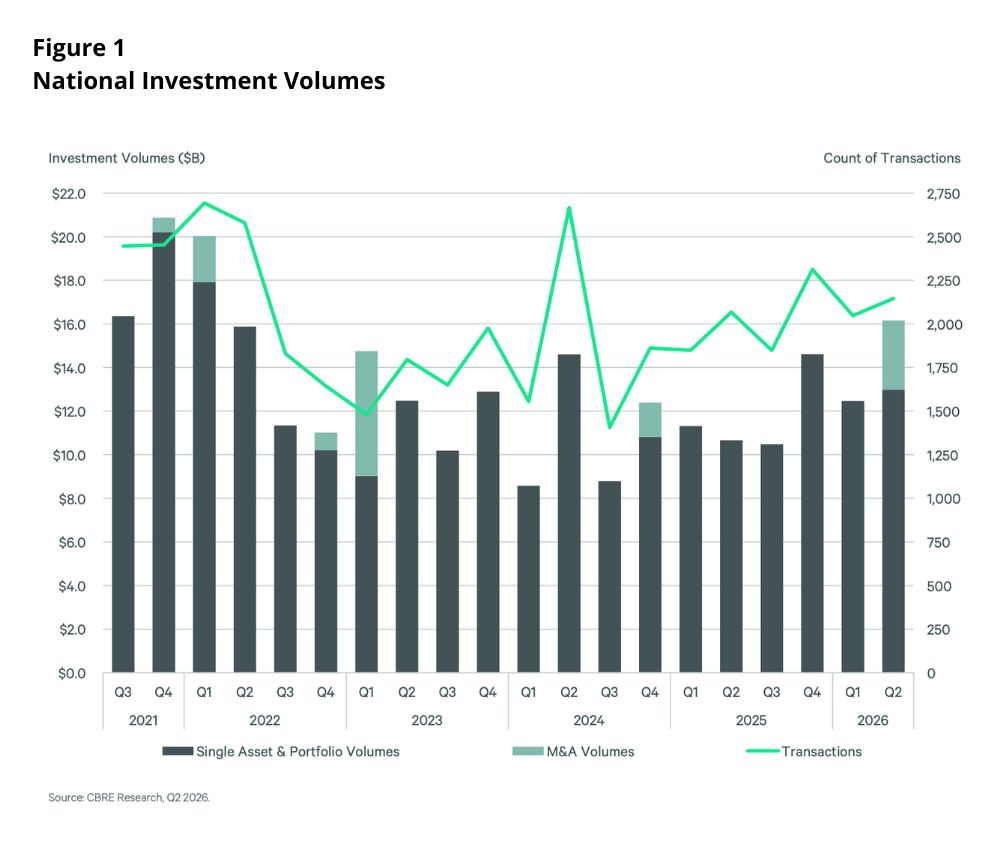
- Canadian commercial real estate investment volumes grew to $16.2 billion in Q2 (up from $11.6 billion last quarter), and were the highest quarterly total since early 2022. This was due to stronger single-asset and portfolio investment activity, further buoyed by Welltower’s acquisition of Amica Senior Lifestyles. (Fig. 1)
Multifamily drove investment activity, with strong momentum in industrial.
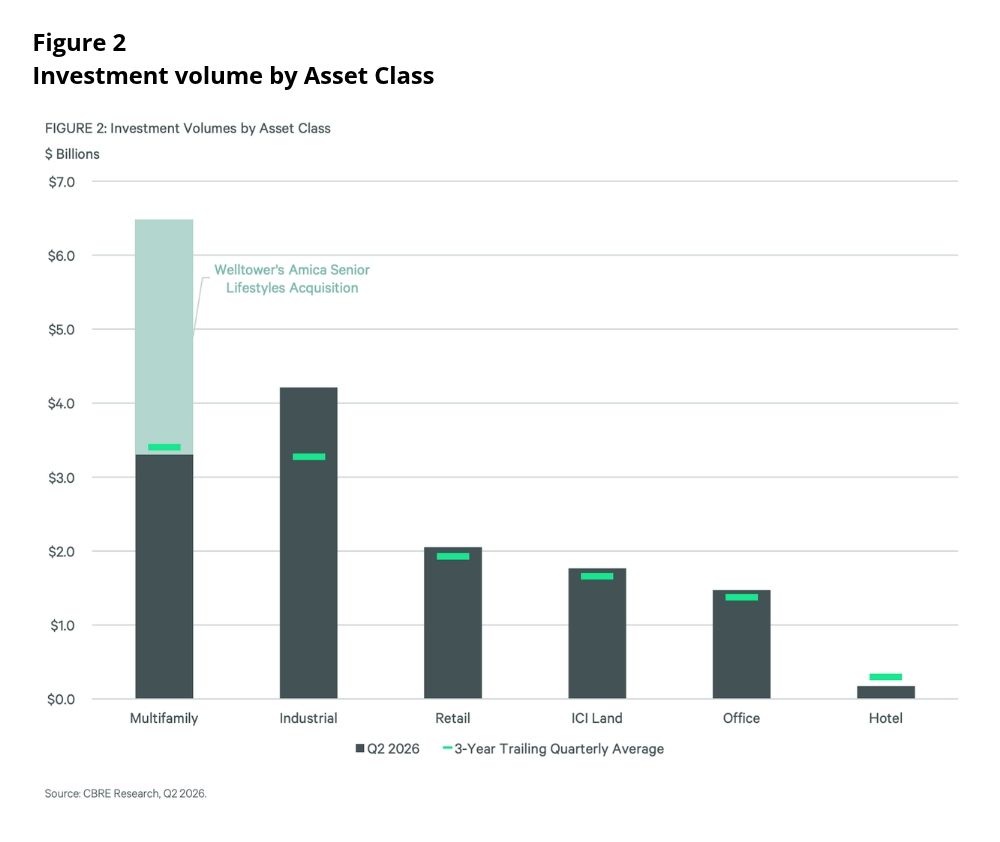
- Multifamily remained the most active investment asset class in Q2 with volumes totaling $6.5 billion, where the Amica Senior Lifestyles acquisition accounted for nearly half of the quarter’s volumes. Industrial continued to attract significant capital investment with $4.2 billion in volumes that well surpassed the trailing three-year quarterly average. (Fig. 2)
M&A led a foreign investment rebound.
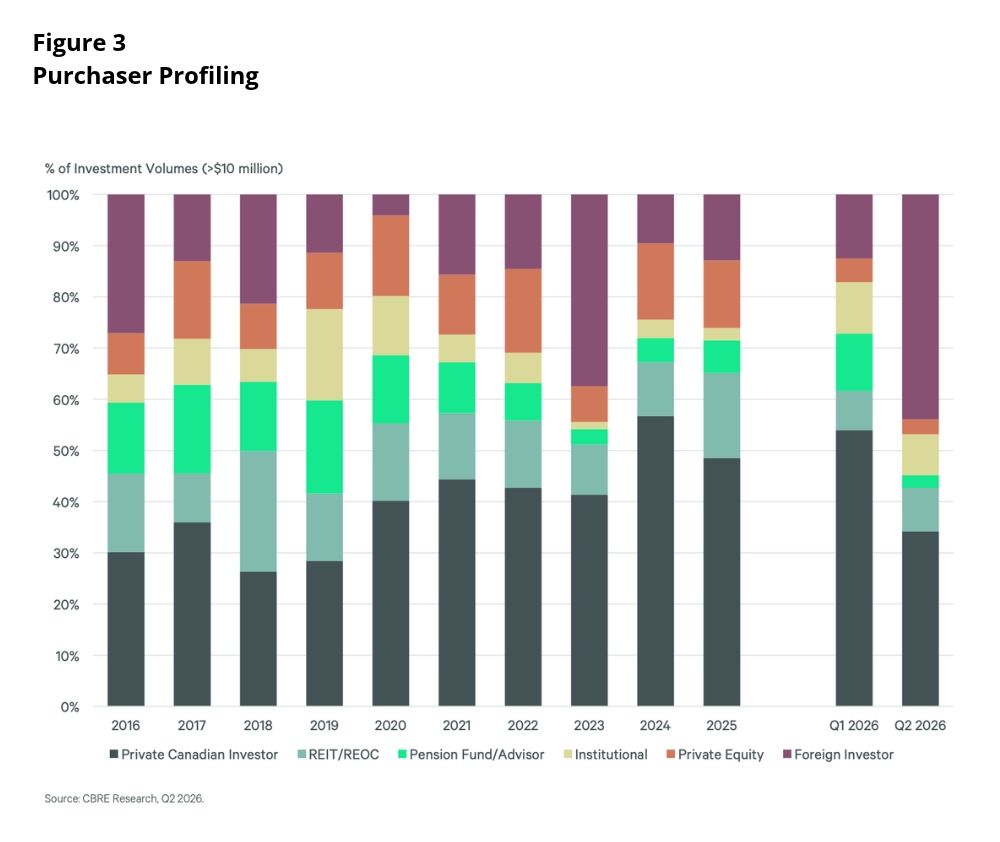
- Foreign investors accounted for the highest level of quarterly investment activity since Q1 2023, making up almost 44% of acquisitions. Private Canadian investors were the second largest purchaser group, accounting for slightly over one-third of acquisitions. (Fig. 3)
The majority of Canadian markets saw higher investment activity in Q2.
- Overall investment activity was broadly positive in Q2, with six out of nine tracked markets recording year-over-year growth in volumes. Toronto dwarfed all other markets and single-handedly accounted for 44% of national volumes in Q2. (Fig. 4)

To view larger images and dive deeper into the data, click on the images above.
LATEST DEVELOPMENTS
Canada Critical Minerals Accelerator Announces First Project
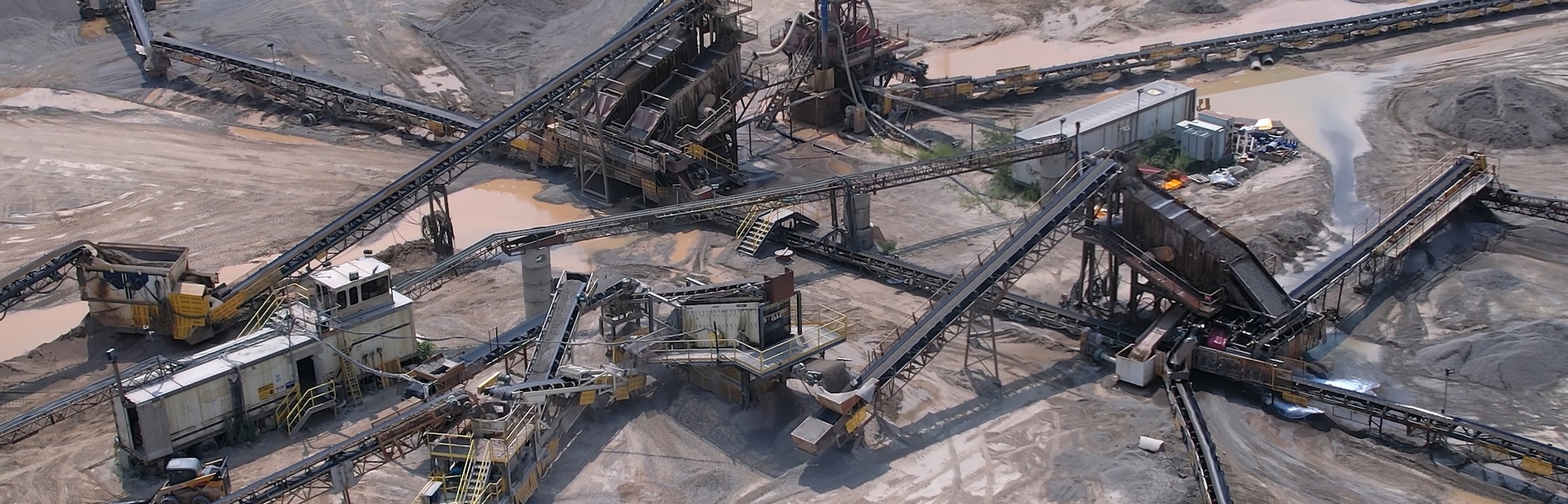
The federal Budget 2025 allocated $2 billion to Natural Resources Canada to create a national Critical Minerals Sovereign Fund, for use by the government to co-invest over five years with private companies to expand Canada’s critical materials production. In July, the fund – now renamed the Canada Critical Minerals Accelerator (CCMA) – announced its first project. CCMA has agreed to invest up to $400 million and Teck Resources Limited will invest up to $850 million in a project to expand germanium, gallium, and antimony production at Teck’s Trail, B.C., smelting and refining complex. As part of the agreement, the parties negotiated the establishment of an offtake structure, including rights for the government to a portion of future materials production from the project. This agreement provides real-world validation of the government’s policy pronouncements and should reinforce landowner, investor and consultant enthusiasm for projects in this important sector.
Canadian Communities Push Back on Data Centre Expansion
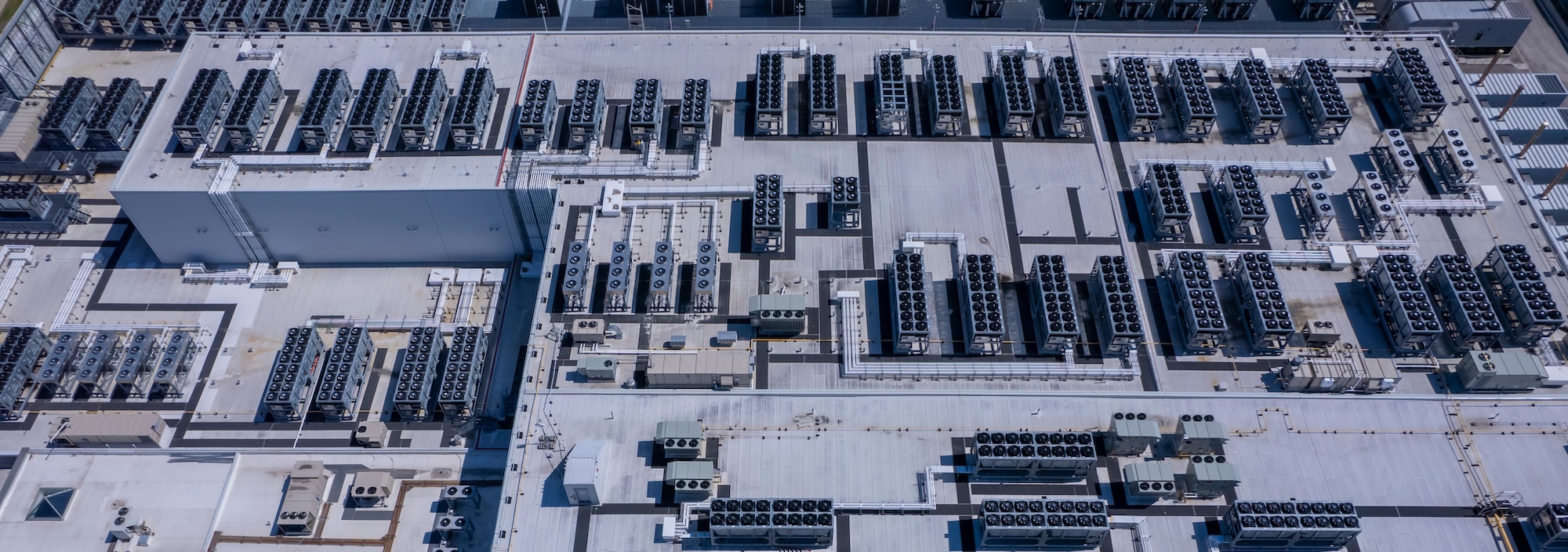
As Canada expands its AI infrastructure, growing community opposition is prompting municipalities to reconsider how large data centres are approved and regulated. Concerns about electricity demand, water consumption, noise, environmental impacts, and potential increases in utility costs are driving calls for development pauses and stronger planning controls.
Municipalities Are Taking Action
In Ontario, Oakville recently adopted an interim control bylaw to pause data centre development in specified areas while reviewing planning policies and infrastructure capacity. Mississauga has also moved to pause development of major digital infrastructure facilities, while Sault Ste. Marie has pursued a temporary restriction as it develops a municipal framework. These measures give municipalities time to assess the potential effects of large facilities on land use, water supplies, electricity demand, and surrounding communities.
Opposition is also emerging elsewhere. In British Columbia, proposed data centre developments in Vancouver have prompted protests and calls for a moratorium. In Alberta, Meta’s planned data centre campus in Sturgeon County has drawn demonstrations over electricity and water demand and concerns about who will bear the costs of supporting new infrastructure. And in Nova Scotia, the Official Opposition leader has called for an emergency sitting of the legislature amid objections to a proposed AI data centre outside Port Hawkesbury.
New Policy Frameworks
Governments are responding with frameworks intended to balance investment and community interests. For example, Ontario launched its Data Centre Playbook in August, emphasizing economic benefits and requiring projects to cover their electricity costs. In September, the federal government introduced Canada’s Responsible Data Centre Development Principles, which call for local benefits, protection of electricity ratepayers, reduced water use and environmental impacts, and greater transparency. However, this framework isn’t legally enforceable, and critics argue it needs binding standards and stronger oversight.
Although Canada’s response remains less widespread than in some U.S. jurisdictions, municipal restrictions and evolving government expectations could influence project timelines and site selection. For developers, early assessment of zoning requirements, electricity and water availability, environmental impacts, and community concerns may help identify potential approval obstacles.
Draft Soil Vapour Guidelines Add New Tool for Contaminated Site Assessment
On August 26, the Canadian Council of Ministers of the Environment (CCME) issued Draft Canadian Soil Vapour Quality Guidelines for the Protection of Environmental and Human Health. These guidelines will join CCME’s suite of Canadian Environmental Quality Guidelines, which provide a comprehensive framework for assessing and remediating contaminated sites throughout Canada. The new guidelines consider possible infiltration of contaminants from soil and groundwater into buildings with basements or those built on concrete slabs directly on soils (limited guidance is also provided for infiltration into trenches and above-ground locations), and provide scientific and managerial guidance to minimize exposures that may be hazardous to human health. The new guidelines provide tables for 42 specific organic compounds, and address each as it may be present in all of the following:
- either of two land use scenarios: a combined agricultural/residential guideline for full-time residents and a combined commercial/industrial guideline, and
- two soil textures (coarse and fine).
The new guidelines also reference existing methodologies for calculating vapour pathways and exposures.
Comments were due by October 20, after which CCME is proceeding to adopt final guidelines. Individual jurisdictions may incorporate them into federal, provincial, and local environmental and land use standards. Landowners, developers, and their consultants will be able to apply these new guidelines along with the existing groundwater guidelines and soil quality guidelines at contaminated sites; note that individual jurisdictions may adopt mandatory standards which may differ from these recommendations.
REGULATORY DEVELOPMENTS
Ontario EAA Amendments Take Effect January 1, 2027
Amendments under Schedule 6 of the COVID-19 Economic Recovery Act, 2020 take effect January 1, 2027, implementing the streamlined environmental assessment process under Part II.4 of Ontario’s Environmental Assessment Act (EAA). The new Part II.4 Projects – Requirements for Commencing and Proceeding (O. Reg. 258/26) establishes a framework for a time-limited review process for medium-low risk routine infrastructure projects, such as local road expansions, water mains, and standard electric lines. Related amendments rename O. Reg. 50/24 to Designation of Part II.3 and Part II.4 Projects and clarify which municipal water, sewage, and stormwater projects require comprehensive environmental assessments under Part II.3. These clarifications also establish which projects (e.g., private residential sewage system installations or modifications) may use the Part II.4 streamlined approach, and which, e.g., an alteration of less than one km of shoreline, are exempt from both EAA, Part II.3 and Part II.4, with oversight by local and provincial authorities only. Together, these amendments clarify project designations, assessment requirements, and exemptions under the EAA.
British Columbia Updates Contaminated Site Protocols
Effective on June 19, 2026, revisions to Protocol 4: Establishing Local Background Concentrations in Soil, and Protocol 9: Establishing Local Background Concentrations in Groundwater, eased requirements to allow local background concentrations to be established without a director’s approval in certain low-risk situations where naturally occurring substance concentrations in groundwater or soil exceed applicable Contaminated Sites Regulation numerical standards and have been explicitly demonstrated and documented by a Qualified Professional (QP) as entirely naturally occurring.
Two additional updates take effect January 15, 2027. Protocol 1: Detailed Risk Assessment (DRA) expands the DRA scope to require consideration of: 1) whether and how potential exposure pathways will change due to climate change; and 2) First Nations’ uses and interests as part of the DRA problem formulation section. Protocol 22: Application of Vapour Attenuation Factors to Characterize Vapour Contamination amendments overhaul the mathematical multipliers used by QPs for vapour intrusion risk calculations and are expected to improve consistency in the review process.
Alberta Updates Well Abandonment and Liability Directives
The Alberta Energy Regulator (AER) issued a new edition of Directive 020: Well Abandonment on July 27, which sets out abandonment requirements, including casing removal, zonal abandonments, and plug backs under the Oil and Gas Conservation Rules. The revision streamlines regulatory processes, including allowing multiple oil or gas source pools to be sealed together in one single operation to prevent fluids from mixing where the AER has designated the geology as stable, predictable, and low-risk.On August 31, AER also released a new version of Directive 011: Estimated Liability, with updated requirements for how licensees estimate, use, and make estimated liability available to the public. The new edition explicitly makes licensees solely responsible for keeping OneStop liability assessment reports accurate and current. It also incorporates other estimated-liability requirements previously contained in other directives, including when a site-specific liability assessment is required, and provisions on the Conditional Adjustment of Reclamation Liability Program and the orphan fund levy.
Thank you to STP ComplianceEHS for contributing the articles under State Developments in this edition.

PRACTICE TIP
Hidden Clues in City Directories
This edition’s Practice Tip presented by:

Contributing Author: Jamie Jastrab, Director, Partner Engineering & Science, Inc.
Everyone scours them over, but what are city directories, and why do we utilize them when preparing Phase I reports? In brief, city directories are compiled listings of residents, streets, businesses, organizations, or institutions that were originally created for salespeople, merchants, and others interested in contacting residents in a specific location. They are readily available from the late 1800s. Historic directory publishing firms include, but are not limited to: Kelly’s, R.L. Polk & Co, Henderson’s, Haines, and Bresser’s.
Per the CSA Z768-01 (R2022) standard, when conducting a Phase I environmental site assessment, city directories must be reviewed for identifying prior uses of a site and its surrounding areas. When data gaps in city directory coverage exist, other sources such as property use records, fire insurance records, contaminated site registries, land titles, and aerial photos should be consulted.
What are we looking for? Indications of potentially contaminating activities from historic or current tenants such as gas stations, foundries, automotive dealerships, industrial facilities, fuel storage, dry cleaners, manufacturing, tanneries, textile plants, etc. While reviewing available records, please note that “no tenant listed”, or “XXXX” does NOT mean there was no tenant present. With the advent of city directories, tenants were offered “advertising opportunities,” where the individual tenant paid to be included in the book. As a result, some tenants chose not to pay the fee and were not included in the listings.
Things to note:
- While the days of going to libraries may be a thing of the past, when trying to close data gaps, it may behoove you to go to your local main branch to research your property as it will likely have each individual/specific year listed.
- Addresses tend to change over time – refer to fire insurance maps, tank registrations, building permits, etc., for potential prior addresses.
ERIS now has a SmartCD search option that meets/exceeds the CSA standard and can inform users of the aforementioned address changes. Using this tool, the subject property, adjoining properties, and properties in the vicinity are researched and gathered for delivery. This SmartCD option is fantastic for due diligence/property transaction reports because it focuses on what’s important without being bogged down in hundreds of pages of superfluous city directory listings.
While reviewing numerous pages of city directories can appear daunting, they really can provide a wealth of historic knowledge for your subject property and adjoining properties, helping to provide a complete understanding of past activities to be able to deliver a complete, accurate report identifying any potential environmental concerns.
FEATURED ERIS PRODUCT
Scriva Report Writer: New Enhancements
Scriva is ERIS’ report writing platform designed for creating and managing environmental reports and assets delivered to clients. Recent enhancements focus on faster report generation, data integration, and assistive writing tools.
What’s new?
One-Click Duplication
Copy finalized, delivered, or archived reports directly from the dashboard, including report content, tables, and appendices.

Integrated CD Tables
Incorporate City Directory data directly into reports, including distance, direction, and listings. Easily filter integrated tables to quickly find and present relevant historical information.

AI Report Assistant
Get automated assistance to optimize text sections, summarize tables and site findings, and convert field notes into report content.

Expanded Property (Building) Condition Assessment Capabilities
Scriva now offers expanded capabilities within the PCA report template, including:
- Smart, Auto Calculating Cost Tables
Scriva handles the math when calculating costs. - Flexible Editing & Libraries
Full Text and Cost Libraries help speed up report writing.
These enhancements are designed to simplify reporting and assist with data integration and the reporting process.
For more information about Scriva’s expanded functionality, or for a full demo, please contact your Regional Account Manager.
SPOTLIGHT ON
Special Profile: Mike Seifert, Regional Account Manager, Prairies

Mike Seifert
Regional Account Manager, Prairies
Sometimes a career change begins in the most unexpected places. For Mike Seifert, it started during a visit to the hot springs in Ainsworth, British Columbia. While reflecting on the next chapter of his career, he realized it was time for a change. Through industry connections and conversations with members of the ERIS team, that moment of clarity eventually led him to join the company in December 2019.
Nearly seven years later, Mike continues to bring a unique combination of technical expertise, industry knowledge, and client-focused problem-solving to his role as Regional Account Manager for the Prairies. Having spent much of his career in the oil and gas sector, he sees a natural connection between his previous experience and the work he does today.
“My oil and gas career was always centered on information and information technology to facilitate better decisions,” he explained. Helping clients access the right information and tools remains at the heart of what he does, whether he’s assisting with orders, meeting clients one-on-one, attending industry events, or training new users.
What stands out most to him about ERIS is the company’s commitment to customer service. He values being part of a team that is responsive, collaborative, and dedicated to providing high-quality products and support.
One of his favourite stories from the road perfectly captures his relationship-building approach. Arriving early for a meeting with a prospective client in Winnipeg, he discovered he had a flat tire. The client came outside, pitched in to help change it, and the two shared a few laughs along the way. What began as an unexpected roadside repair turned into one of his strongest client relationships and a lasting friendship.
When he’s not working, you’ll often find Mike cycling around Calgary, swimming, woodworking, or enjoying the occasional streaming binge on a cold day. He has also participated in two Battlefield Bike Rides in Europe with Wounded Warriors Canada, combining his love of cycling with a meaningful cause.





UPCOMING EVENTS

2026:
November 17-19, Calgary, AB: Mike Seifert will present at AESAC’s Phase I ESA Certification Training.
November 25-26, Calgary, AB: Join Mike Seifert at CANECT West.
December 2, Winnipeg, MB: Mike Seifert and Brayden Ford will attend MEIA’s Cleantech Conference.
2027:
January 19, Vancouver: Join Jasmeen Jatana and Brayden Ford at SMART Remediation.
January 20-21, Vancouver, BC: Diana Saccone and Brayden Ford will attend CE3C, the Canadian Environmental & Engineering Executives Conference.
January 21, Calgary, AB: Join Mike Seifert and Eleanor Goolab at SMART Remediation.
January 28, Toronto, ON: Join Brayden Ford and Melissa Tran at SMART Remediation.
February 11, Ottawa, ON: Join Brayden Ford and Melissa Tran at SMART Remediation.
March 2-4, Edmonton, AB: Mike Seifert will attend the CLRA AGM & Conference.
March 23, Mississauga, ON: Join Brayden Ford and Melissa Tran at QPCO’s 2027 Workshop.
March 17-18, Saskatoon, SK: Mike Seifert will attend SEIMA’s SustainTech.
March, Calgary, AB: Mike Seifert will present at AESAC’s Phase I ESA Certificate Training.
April, Cambridge, ON: Melissa Tran will present at AESAC’s Phase I ESA Certificate Training.
April 27-29, Vaughan, ON: Join Melissa Tran at CANECT.
May 12-14, Whistler, BC: Join Team ERIS at BEST.
May 26, Burlington, ON: Join Team ERIS at CBN’s Annual Conference.
Thank you for reading this issue of the ERIS Insider newsletter.
Our next issue will drop in June.