ERIS Insider summarizes key news items and current trends shaping the work of environmental assessment and due diligence practitioners.
ERIS Insider Sections
IN FOCUS
How AI Is Moving Real Estate Decision-Making Upstream of Due Diligence

While artificial intelligence is being piloted to analyze environmental and property data during due diligence, AI is also influencing broader real estate development considerations. Emerging applications are reshaping how development teams evaluate potential sites, analyze zoning constraints, and assess redevelopment feasibility earlier in the project lifecycle. Increasingly, developers, investors, and real estate technology platforms are using AI to synthesize zoning, geospatial, infrastructure, and market data to support site selection. By enabling faster screening of potential redevelopment sites and identifying regulatory or physical constraints that may affect feasibility, risk, or transaction outcomes, these tools are influencing development decisions upstream of the formal due diligence process.
Site Selection and Feasibility
As real estate becomes more data-driven, artificial intelligence is playing a greater role in generating more comprehensive risk profiles for individual properties. AI-enabled geospatial tools like ESRI ArcGIS and Google Earth Engine can integrate and analyze maps, satellite imagery, zoning data, environmental variables, infrastructure, and demographic trends drawing on public and proprietary datasets, to identify optimal development sites and evaluate long-term viability. By rapidly synthesizing large volumes of geospatial, regulatory, and market data, these tools enable developers to make earlier, more informed site-selection decisions and uncover underutilized or redevelopment-ready parcels.
These capabilities are often integrated into PropTech (property technology), a growing market sector comprising feasibility platforms that allow investors and developers to evaluate potential projects more efficiently. By integrating market data, zoning and geospatial inputs, and infrastructure and environmental considerations, these platforms can model development scenarios, test assumptions, and highlight location-specific risks. Many also include collaborative features that help project teams share insights and refine analyses in real time. For example, Deepblocks is an AI-powered platform that analyzes financial and market data along with local zoning regulations to provide real-time site optimization and feasibility assessments.
Other platforms include Archistar Property’s Generative Design Engine, which uses up-to-date aerial imagery and data to help developers find suitable sites while identifying relevant regulatory requirements or development agreements already in place. CityBldr helps users find underutilized land and determine its best use. The nonprofit National Zoning Atlas centralizes zoning information for more than 33,000 U.S. jurisdictions and translates it for the public.
Market Analysis and Redevelopment Strategy
Artificial intelligence is reshaping how developers and investors analyze market conditions and evaluate redevelopment opportunities. By processing large volumes of historical transaction data, demographic information, and current market indicators, AI systems can detect patterns that may signal future shifts in pricing, demand, or vacancy rates. These analytical capabilities allow real estate professionals to assess project feasibility, estimate development costs, and model potential returns earlier in the decision-making process. AI tools can also highlight cyclical or seasonal market dynamics, helping investors better time acquisitions, dispositions, or redevelopment efforts.
AI can support regulatory and financial analysis by modeling project economics, forecasting demand, and identifying potential issues in title or transaction records, providing development teams with deeper insight as projects move toward execution. StateBook, another AI tool, provides comprehensive economic data, including federal, state, and local tax incentives, allowing users to compare locations and identify the most strategic investment opportunities.
Several prominent real estate and financial institutions have begun incorporating AI-driven analytics into their operations. For example, Skyline AI and Zillow employ machine-learning models to analyze large real estate datasets and generate market insights. Major industry participants are also adopting AI to support internal decision-making and operational efficiency. CBRE uses AI-based analytics for pricing forecasts, predictive modeling, and portfolio management, while Bank of America has implemented AI technologies to automate portions of the loan application process.
Public Sector Applications
In addition to private-sector adoption, local governments are beginning to explore how artificial intelligence could support municipal planning and regulatory functions that affect real estate development. Several U.S. municipalities are testing AI tools to help streamline tasks such as construction permit reviews, development application processing, and aspects of code enforcement. Proponents suggest that these systems could improve efficiency and consistency in planning departments by assisting with routine administrative work, analyzing land-use data, and potentially drafting zoning guidance or other planning resources. While such tools could ultimately help accelerate the development approval process, most governments are still evaluating the technology through pilot programs as they assess its reliability and limitations.
AI may also assist regulators in prioritizing environmental compliance oversight. With hundreds of thousands of permitted facilities subject to federal environmental regulations, including industrial operations and fossil fuel power plants, government agencies face practical limits on inspection capacity. Some researchers have suggested that AI models capable of analyzing regulatory data, operational records, and other indicators could help identify facilities that are more likely to be out of compliance, allowing regulators to focus inspections where potential risks are greatest.
Looking Ahead: Balancing Technology and Expertise
Artificial intelligence is well-suited for real estate, where the industry relies on large datasets, repeatable processes, and extensive documentation, all of which can be optimized through predictive analytics and generative tools. As a result, AI is reshaping how redevelopment opportunities are identified, enabling developers and investors to assess site suitability more efficiently. However, AI tools rely on datasets that can be incomplete, outdated, or unable to fully capture site-specific environmental conditions. These tools also cannot interpret context beyond the data, which is why expert analysis is essential to ensure that information is reliable, understood in a regulatory context, and that initial assumptions hold through transaction, permitting, and construction stages.
As AI becomes more integrated into real estate decision-making, it raises governance considerations around data privacy, security, and algorithmic bias, making client consent and ongoing auditing essential to support fair and reliable outcomes. While AI may accelerate how opportunities are identified and evaluated, experienced environmental professionals continue to play a critical role in confirming risks, interpreting requirements, and translating technical findings into practical guidance for development teams.
Looking ahead, continued advances in machine learning and data analytics are expected to expand AI’s role in commercial real estate. Broader adoption will depend on stronger data governance practices, clearer ethical frameworks for AI deployment, and robust cybersecurity safeguards to support responsible and reliable use across the industry.
Editor’s Note: ERIS continues to explore how AI can improve data quality and increase efficiencies to support environmental professionals and their environmental due diligence decision-making. If you’re interested in how ERIS is evaluating and integrating these tools in practice, please contact Diana Saccone.
CRE MARKET UPDATE
The Latest Market Updates in the U.S. Commercial Real Estate Industry (Q4 2025)
Continued Investment Growth
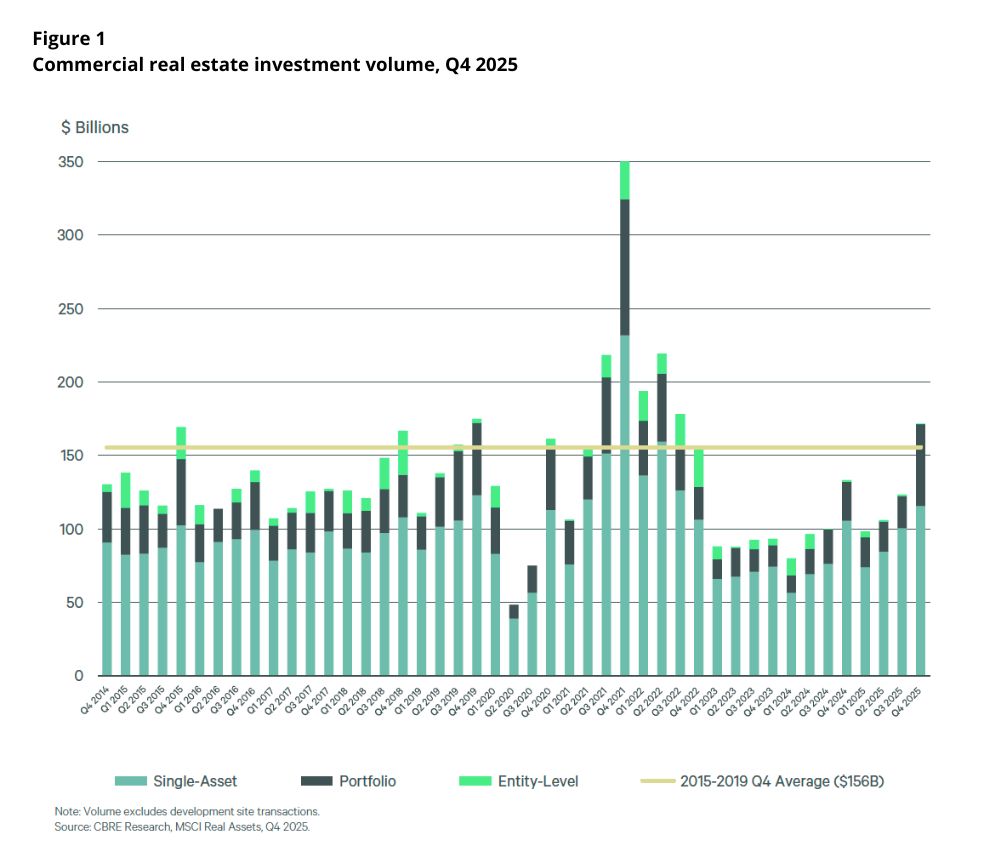
Commercial real estate investment volume increased by 29% year-over-year in Q4 2025 to $172 billion, according to CBRE Research. Annual volume was $499 billion, 22% higher than in 2024.
Q4 portfolio sales rose 109% year-over-year to $56 billion, largely attributable to one major data center transaction. Single-asset sales grew by 10% year-over-year, reaching $116 billion, while entity-level investment volume fell by 69% to $354 million (Fig. 1).
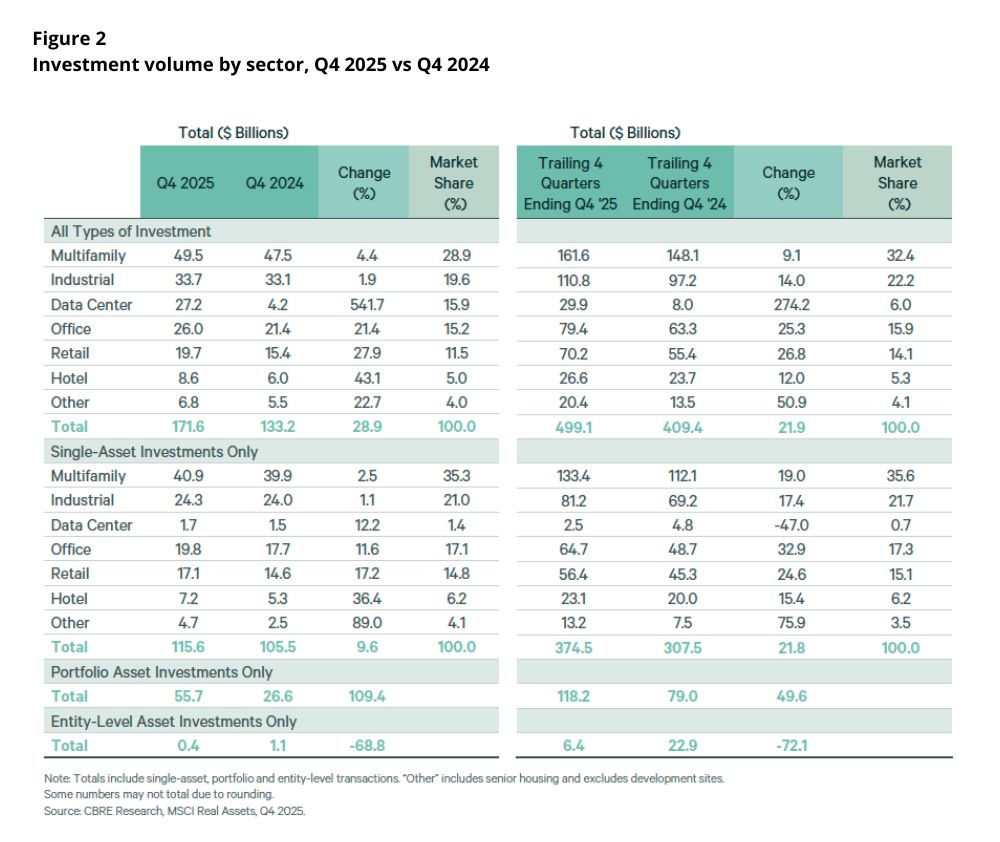
Once again, multifamily properties led all property types for investment volume, increasing by 4% year-over-year to $50 billion (Fig. 2). The industrial and logistics sector ranked second again, recording $34 billion in investment volume, up 2% year-over-year. Office investment rose 21% year-over-year to $26 billion in Q4, while retail investment increased by 28% to $20 billion. Data center investment surged to $27 billion in Q4 from $1.5 billion in Q3, primarily due to the large portfolio transaction mentioned above.
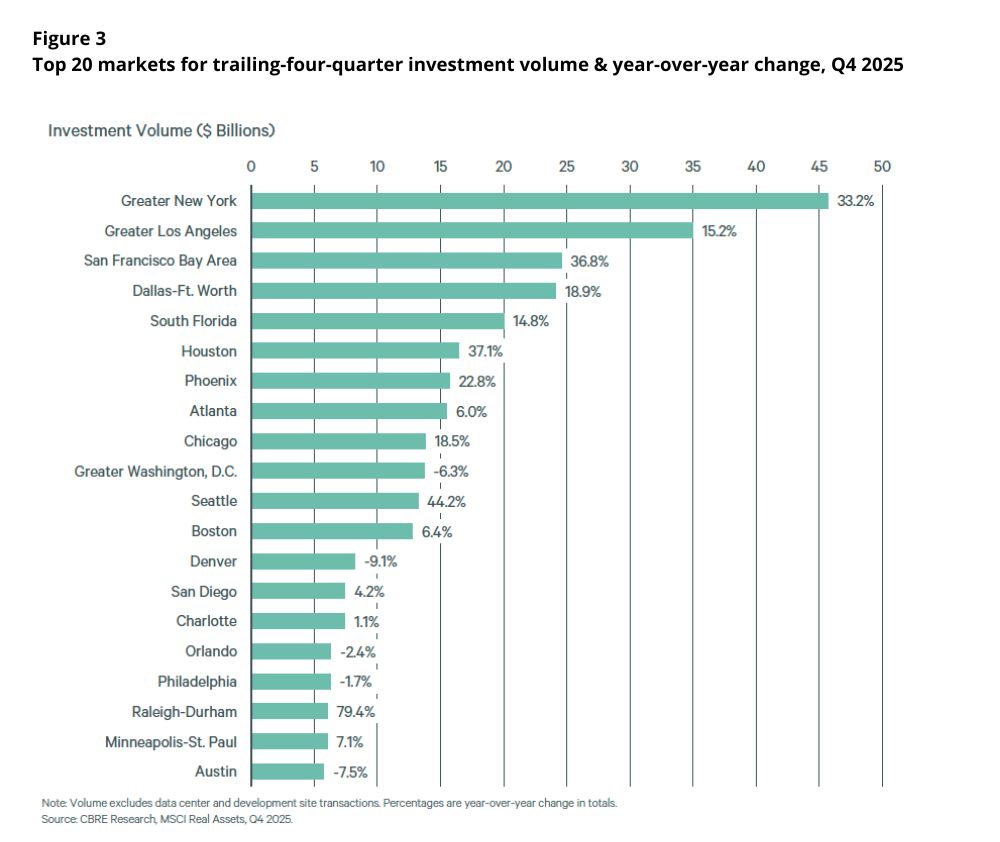
For the prior five quarters ending in Q4 2025, New York was the top market for investment with $46 billion, followed by Los Angeles at $35 billion, and the San Francisco Bay Area at $25 billion. Of the top 20 markets for total annual volume, Raleigh-Durham had the largest year-over-year increase at 79%, followed by Seattle (44%), Houston, and the San Francisco Bay Area (each 37%).
Private investors had the largest share of investment volume for the sixth consecutive quarter, accounting for $92 billion, 53% of Q4 volume, representing a 18% increase from a year ago (Fig. 4). Institutional investment volume rose by 18% year-over-year to $27 billion, accounting for 16% of total volume. Inbound cross-border investment volume fell by 37% year-over-year to $6.4 billion. Private and institutional investors were net buyers in Q4, while REITs and cross-border investors were net sellers.
Source: CBRE Research, Q4 2025
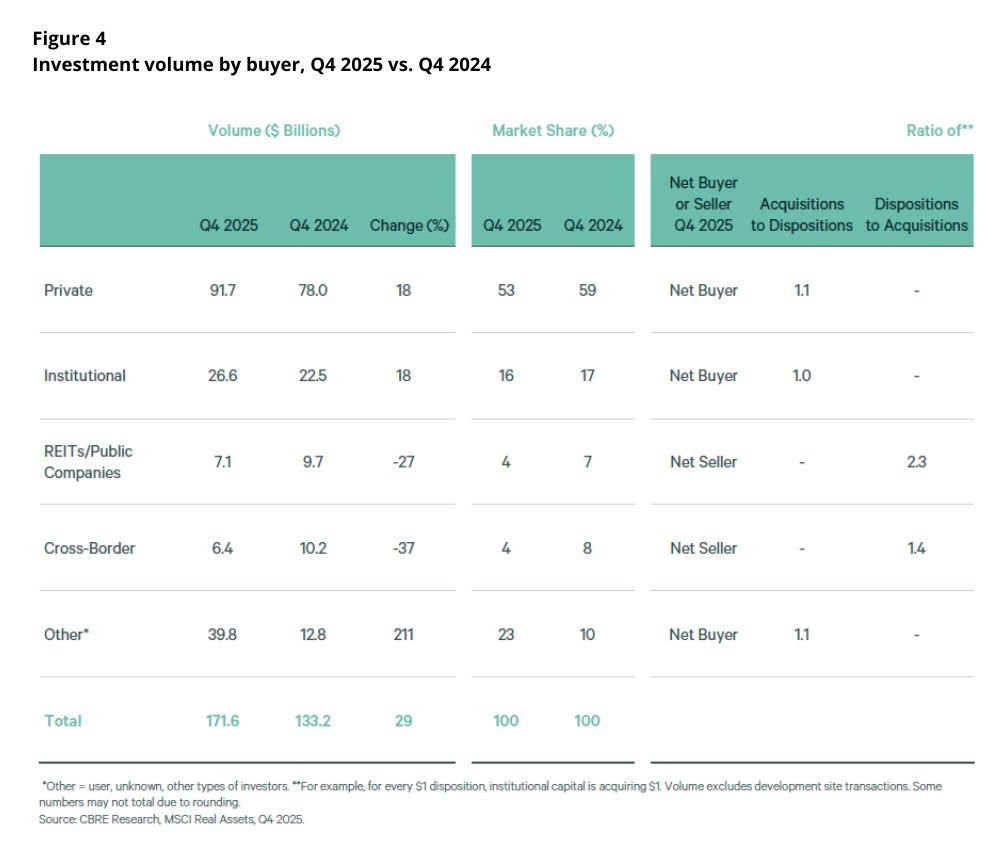
To view larger images and dive deeper into the data, click on the images above.

LATEST DEVELOPMENTS
Shifts in Federal Approaches Highlight Evolving Environmental Policy Landscape

Recent federal environmental policy developments reflect continued implementation of the Trump administration’s regulatory priorities. In December 2025, EPA’s Office of Enforcement and Compliance Assurance (OECA) issued a memorandum laying out the agency’s “Compliance First” approach to environmental enforcement. The policy aligns with the agency’s “Powering the Great American Comeback Initiative” and aims to deliver on its promises to ensure clean air, land, and water; enhance cross-agency partnerships and revive cooperative federalism; and restore American energy dominance.
The memorandum directs OECA staff to prioritize proactive measures, such as outreach, technical assistance, and voluntary self-reporting, to achieve compliance rather than relying on prolonged enforcement actions. It emphasizes coordination with state partners, open communication with regulated entities, clear and consistent findings of violation, and efficient, legally grounded compliance requirements and remedies. For example, the “find and fix” framework uses confidential risk-assessment audits, allowing companies to self-report potential compliance issues. Under this framework, EPA is looking for industry to evaluate its own compliance status regularly and continue to prepare for inspections. This policy could also indicate a shift toward more administrative, rather than judicial, resolutions when noncompliance cases arise.
Clean Air Act Policy Changes
In February, EPA finalized a rule abolishing its 2009 “endangerment finding” under Clean Air Act § 202(a) that greenhouse gas (GHG) emissions endanger public health and welfare, and rescinding federal GHG emissions standards for all vehicles.
This ultimately dismantles EPA’s authority to regulate GHG emissions under the Clean Air Act, reversing more than 15 years of federal climate policy. Regulated entities will face fewer federal requirements and enforcement risks related to GHG emissions, likely reducing compliance costs and shifting greater focus to state-level regulations. The repeal has drawn strong opposition, and a coalition of health and environmental groups has filed a lawsuit challenging the rescission.
Continued Rollout of NEPA Reforms
Following the formal rescission of government-wide NEPA rules, the Department of the Interior (DOI) recently overhauled its NEPA procedures, shifting most requirements from formal regulations to an internal handbook. This rescission finalizes the interim final rule published in February 2025. Since that time, many other agencies have also updated their NEPA rules and guidance, including the Departments of Energy, Agriculture, and Transportation; the Federal Energy Regulatory Commission; and the National Oceanic and Atmospheric Administration.
DOI’s new framework introduces stricter timelines for environmental reviews, narrows the scope of environmental effects analysis to those that are reasonably foreseeable and closely related to the proposed action, and allows decision-makers to weigh economic impacts alongside environmental ones. It also reduces mandatory public participation requirements. These changes aim to speed up project reviews and provide more flexibility, but they may also introduce greater uncertainty as procedures can evolve more easily outside formal rulemaking.
EPA Resources to Assist in Data Center Development on Contaminated Sites

EPA has released new guidance and a mapping tool to help evaluate whether formerly contaminated properties can support data center development. These new resources align with last year’s Executive Order on Accelerating Federal Permitting of Data Center Infrastructure (EO 14318).
The EPA guidance outlines key considerations for companies, developers, and communities exploring data center development on Superfund and brownfield sites. These include ensuring proposed facilities are compatible with existing cleanup activities or completed remedies, understanding potential legal and long-term stewardship obligations, engaging with affected communities, and confirming access to necessary infrastructure such as power and water.
Additionally, a new redevelopment mapping tool allows users to identify Superfund and brownfield properties and assess their redevelopment potential. The map allows sites to be searched and filtered according to location, size, and proximity to transportation, energy infrastructure, population, and water availability, among other parameters. This offers a starting point for planners and developers considering Superfund and brownfield sites for data center projects.
State Appellate Court Upholds NJ’s Environmental Justice Regulations
A state appellate court recently rejected challenges to the regulations implementing New Jersey’s landmark environmental justice law.
Under the law, applicants seeking a permit for certain facilities near overburdened communities must submit an Environmental Justice Impact Statement (EJIS) and hold public hearings. The law allows the New Jersey Department of Environmental Protection (NJDEP) to deny permits if a project would impose disproportionate environmental or health burdens, unless the applicant demonstrates that the project serves a compelling public interest in the affected community. NJDEP can also impose permit conditions to lessen any disproportionate impacts.
Industry challengers to NJDEP’s 2023 implementing regulations argued that the rules exceeded the agency’s statutory authority, were vague or overly broad, and improperly excluded economic benefits from the definition of “compelling public interest.” The court rejected these arguments, concluding that NJDEP acted within its authority and reasonably interpreted the law when crafting the rules.
As a result, covered facilities should continue accounting for environmental justice considerations early in project planning and in their permitting strategies.
California, New York, New Jersey Work Toward Corporate Climate Disclosure
Corporate climate disclosure obligations are becoming more complex as states, including California, New York, and New Jersey, develop their own reporting frameworks.
Despite ongoing legal challenges, the members of the California Air Resources Board (CARB) recently voted to approve regulations implementing the state’s climate disclosure rules. These regulations establish applicability criteria and exemptions, definitions, fee calculations, and enforcement for the Climate Corporate Data Accountability Act (Senate Bill 253) and the Climate-Related Financial Risk Act (Senate Bill 261), and set an August 10, 2026, reporting deadline for SB 253. Under court order, CARB isn’t currently enforcing SB 261, so compliance is voluntary. Read more about the legal challenges to SB 261 in our last newsletter.
In February, the New York Senate passed its own Climate Corporate Data Accountability Act (SB 9072A), which requires entities that do business in New York and generate over $1 billion in revenue to disclose their direct and indirect greenhouse gas emissions annually. Under the bill, entities must disclose their scope 1 (direct emissions from a company’s own facilities and vehicles) and scope 2 emissions (indirect emissions from the company’s purchase of power for electricity, steam, heating, or cooling) for the prior fiscal year starting in 2028, and scope 3 emissions (indirect emissions produced throughout a company’s supply chain) for the prior fiscal year starting in 2029.
Meanwhile, New Jersey lawmakers removed reporting requirements for scope 3 greenhouse gas emissions from the state’s proposed Climate Corporate Data Accountability Act (Senate Bill 679). The bill, which has been referred to the Senate Budget and Appropriations Committee for further consideration, would still require companies with $1 billion or more in annual revenue that do business in New Jersey to report their scope 1 and 2 emissions.
STATE DEVELOPMENTS
Site Remediation Changes in New York
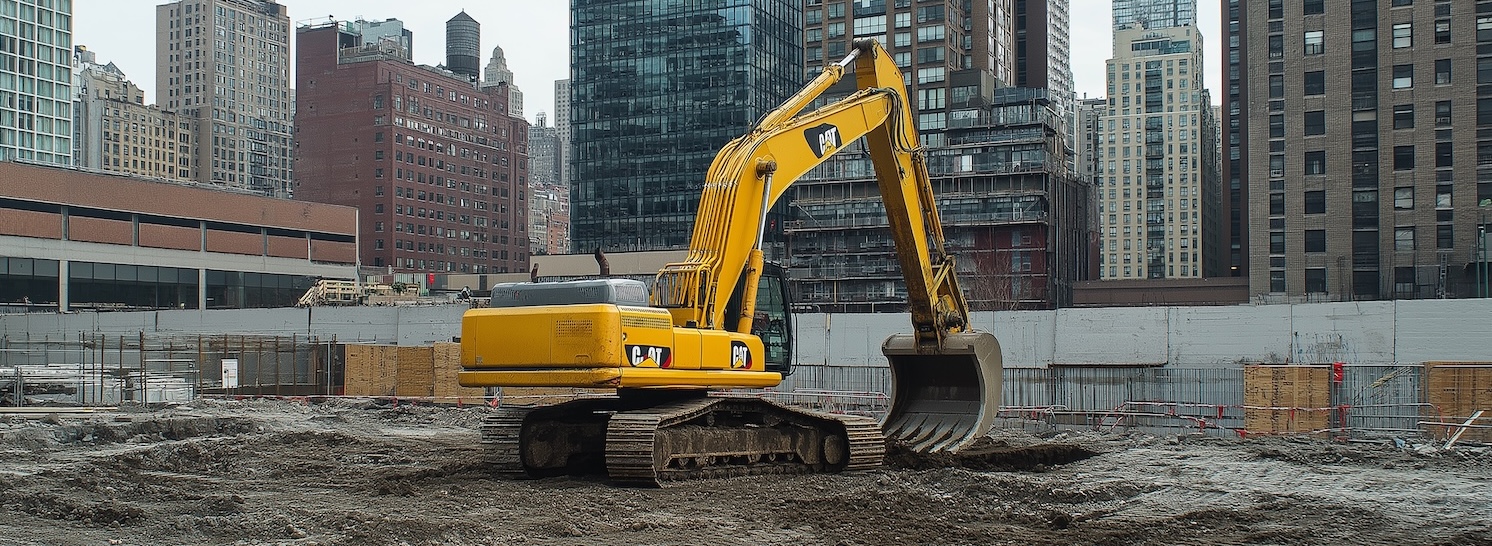
On December 31, 2025, the New York State Department of Environmental Conservation (DEC) adopted, with immediate effect, comprehensive amendments to the state’s environmental remediation regulations. These amendments to 6 NYCRR Part 375 (Environmental Remediation Programs) were designed to align DEC’s implementing regulations with statutory changes made to the Brownfield Cleanup Program (BCP) in 2015 and 2022.
Both the 2015 and 2022 amendments modified the BCP, but many of those changes were not fully reflected in Part 375 until this rulemaking. The regulatory amendments update Part 375 to reflect the statutory language, definitions, and program requirements modified in 2015 and 2022, including what qualifies as a brownfield site. The eligibility criteria were expanded to allow certain state Superfund sites to enter the BCP, provided applicants meet additional requirements, such as identifying potentially responsible parties. Additionally, projects in New York City don’t automatically qualify for the most lucrative property development tax credits. They must fit into at least one approved category, or “gate,” to ensure that tax incentives go to projects with clear public or economic benefits.
Part 375 also now incorporates refined cleanup track requirements. Track 1 Certificates of Completion are issued only after groundwater conditions have stabilized, while sites that meet unrestricted soil standards but still require short-term controls for groundwater or soil vapor receive Track 2 Certificates, with the option to later convert to Track 1 if those conditions are resolved within five years.
Other changes to Part 375 include revised soil cleanup objectives based on updated health data, clearer and more detailed requirements for remedy selection and implementation, and expanded guidance on the use of institutional and engineering controls. The amendments also improve consistency across remedial programs, such as the BCP, State Superfund Program, and Environmental Restoration Program, while streamlining work plan, reporting, and site management requirements.
Rescission of Maine’s 10-Year UST Service Limitation
Effective March 15, 2026, the Maine Department of Environmental Protection (DEP) revised Chapter 691, Rules for Underground Oil Storage Facilities, to reflect statutory changes, modernize technical standards, and better align state requirements with current industry practices and Maine law. Most notably, the prior 10-year post-warranty service-life limitation for certain double-walled underground storage tanks (USTs) has been removed, allowing continued operation beyond that period provided the systems meet applicable performance, monitoring, and maintenance requirements.
The amendments also revise UST removal and abandonment requirements, including updates to Appendix J, and generally harmonize state provisions with federal UST regulations. In addition, the rule clarifies the definition and regulatory treatment of certain waste oil streams, updates reportable quantities, and aligns cleanup thresholds with DEP’s Remedial Action Guidelines.
West Virginia Updates De Minimis Standards
Effective April 8, 2026, the West Virginia Department of Environmental Protection (WVDEP) adopted revised De Minimis Standards under its Voluntary Remediation Program. The updated values apply to voluntary remediation and brownfield redevelopment projects statewide. The De Minimis Standards are risk-based screening levels derived from exposure and toxicity assumptions and were last updated in 2021; the 2026 revisions incorporate updated chemical-specific data, exposure factors, and toxicity values.
Additional revisions include the incorporation of newly designated CERCLA hazardous substances, including certain per- and polyfluoroalkyl substances (PFAS); updated lead values consistent with recent U.S. EPA guidance for residential soils at CERCLA and RCRA sites; and an increase in the default residential exposure duration from 26 to 30 years to better reflect state-specific residency assumptions. WVDEP has also provided a detailed technical rationale for these updates in its supporting Documentation of Proposed Updates to the WV De Minimis Standards.
Thank you to STP ComplianceEHS for contributing the articles under State Developments in this edition.

LENDERS’ CORNER
Is the Private Credit Crunch an Opportunity for Traditional Lenders?

Dave Colonna, Director, Lender Solutions, ERIS
To understand what some describe as an emerging private “credit crisis,” it’s important to look at how the market has evolved. When commercial banks faced tighter lending conditions and mounting regulatory constraints post-2023, private credit funds stepped in to fill the resulting massive lending void. This shift extended into segments of the commercial real estate (CRE) market, where speed and flexibility are always critical to closing deals.
In this lending environment, borrowers had the option to use a private credit fund instead of a traditional commercial bank loan, which offered several advantages. For example, private credit funds provided customized loan structures, higher risk tolerance, and quicker access to capital. Private lenders also offered flexible terms, whereas a strict regulatory framework limited banks. For some, these benefits outweighed the lower interest rates offered by traditional lenders, leading to a significant loss in market share for commercial banks.
Rapid Growth and Emerging Stress in Private Credit
The private credit sector has seen exponential growth. From 2020 to 2025, the market grew by 50% and is now estimated to be a $3 trillion industry. A diverse range of companies utilize these private credit funds, including high-growth start-ups, private-equity-backed firms, and real estate developers. In CRE, private credit became a key source of capital for transitional assets, redevelopment and adaptive reuse projects, as well as other deals that fell outside traditional bank underwriting. Historically, most of these private lenders were small- to mid-market corporations; however, some global corporations also recognized the appeal as the market expanded.
More recently, the private credit market has begun to show real signs of stress. In January 2026, the U.S. private credit default rate hit 5.8%, the highest since 2024.
The evolution of AI has disrupted many software companies that leveraged these types of loans. Many private credit firms have experienced record numbers of investors pulling their money out, with some instituting withdrawal caps. For CRE transactions, this tightening could reduce the availability of higher-risk capital, particularly for redevelopment projects or more complex assets that previously relied on flexible, non-bank financing.
A Reopening for Banks in CRE Lending
While private credit was originally an alternative to traditional bank loans, the two categories have since become intertwined. As private credit funds grew, they required additional capital and increasingly relied on financing from traditional banks.The result? U.S. banks now hold roughly $300 billion in private credit exposure.
“Our 2026 optimism is being dampened by the war and the issues with private credit. Banks are exposed to private credit funds through their warehouse lending platforms,” said Joe Derhake, CEO of Partner Engineering and Science, Inc. “Private credit has helped protect the CRE economy from foreclosures with bridge lending, and a pullback in private credit and/or bank lending would be a headwind for the 2026 CRE economy.”
As stress in the sector deepens, that exposure extends across the broader lending system. At the same time, however, many banks see this moment as an opportunity to regain lost market share as borrowers return to more stable sources of capital. This resurgence could have several positive effects on CRE. Lower borrowing costs and increased market stability, combined with lower interest rates, should spur new loan growth and make refinancing easier for borrowers.
PRACTICE TIP
Pulling the Thread to Close the Data Gap

This edition’s Practice Tip Presented by:
Contributing Authors: Andrew Basehoar, PG, LSRP, David DiPascale, LSRP, Trevor Mays, Robert Russell, Kristin Heimburger, LSRP
One of the most frustrating and detrimental issues when performing environmental due diligence is a gap in site history. Fire insurance maps, city directories, and aerial photographs usually provide the information needed to understand the site history. However, there are times when the operations are vague or a mystery. An example would be an “S” (for a store) on fire insurance maps for 50 years without any corresponding city directory listings or any indication of specific historic uses of the property. As environmental professionals, it is important to close that data gap to offer the most accurate product possible.
Below are three valuable tools that can help an EP close the data gap.
- Newspapers.com
This website can be used to research an address or operation to determine what was historically performed. It operates similarly to a search engine in that it will highlight your tools in newspapers as far back as the 1800s. Example: searching the address from the fire insurance map can lead to an advertisement for a dry cleaner; the “S” for 50 years just became a REC. Note: subscription website. - Vintage Aerials
This website is useful in rural areas. Aerial photographs provide an over-view shot of a building; however, the property use may be unknown with limited city directory listings. This website can provide a bird’s-eye view of the building pre-2000s (if coverage is present), which can depict the former dispenser islands and UST fields. Note: free website. - New York City Street View
NYC had Street View before the internet existed. This website provides 1940 and 1980 street view photographs of most, if not all, blocks in NYC. This is useful for seeing whether a dry cleaner in the 1942 city directory was not a “drop-off only” location. Note: free website.
When used in accordance with ASTM E1527, these tools help strengthen environmental due diligence, address data gaps, and support meeting All Appropriate Inquiries requirements.
ASTM DEVELOPMENTS
ASTM E50 Committee Week Recap
Members of ASTM’s E50 Committee gathered in Dallas, TX, March 23-25 to discuss, develop, and advance standards related to environmental assessment, risk management, corrective actions, and sustainable practices. The committee has six technical subcommittees that oversee 93 standards. The multi-day program featured subcommittee meetings, task group discussions, and working sessions covering topics such as Phase I/II environmental site assessments, PFAS investigation and remediation, climate resilience, brownfields, and nature-based solutions.
Subcommittee E50.02 discussed the 5-year review of E1527-21 covering key areas such as clarifications and definitions; documentation and reporting; data collection and due diligence practices; emerging environmental risks; institutional controls and regulatory gaps; controlled RECs; continuing obligations and liability protections; self-directed cleanups; and updates to appendices and examples. The discussion also addressed other hot topics, including drone use and AI-related implications and disclosures.
The next E50 Committee Week will be held in Jacksonville, FL, October 5-7, 2026.
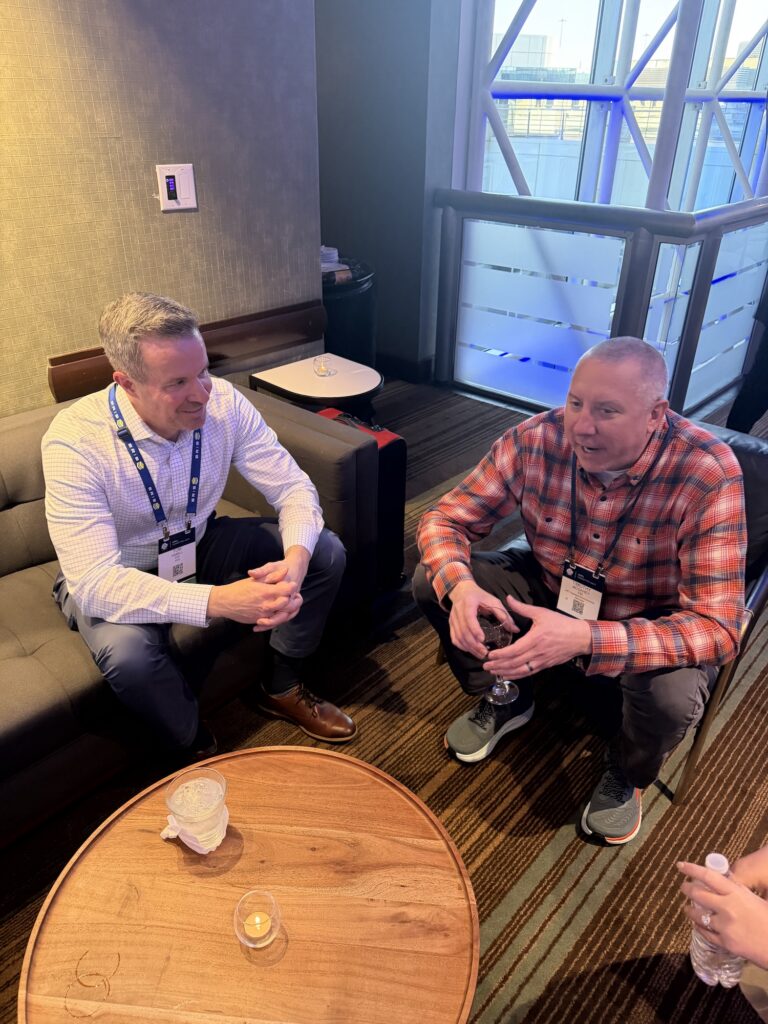 ASTM Committee Week March 2026 Social – Tim McGahey from AKT Peerless with Tom Hamill
 ASTM Committee Week 2026 Social – Paul Zovic from PZ Group with Amanda Sugg
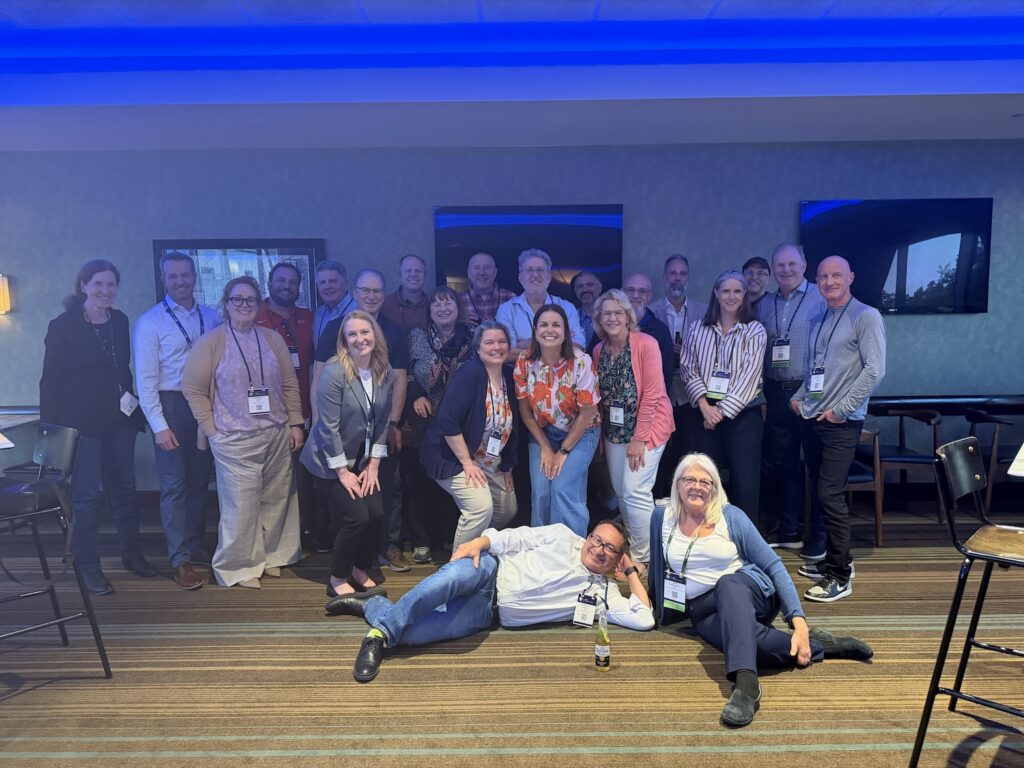 ASTM Committee Week March 2026 – Group shot
New Standard Establishes Consistent Language for Building and Property Assessments
ASTM International has published a new standard, E3514-26, that establishes a consistent terminology for environmental and physical condition assessments of buildings and property. The standard compiles definitions and abbreviations from 15 existing standards developed by ASTM Committee E50.02 on Real Estate Assessment and Management, creating a uniform set of guidelines for these commonly used terms.
E3514-26 was designed to provide shared, preferred terminology for professionals working in real estate assessment and due diligence. By aligning definitions and clarifying meanings, the standard helps improve communication across stakeholders involved in property evaluation, including consultants, developers, and regulators.
New Standard for PFAS Sampling Methods
A new standard (E3511), recently approved by ASTM’s Committee E50 on Environmental Assessment, Risk Management and Corrective Action, provides a comprehensive overview of the development of PFAS environmental field sampling plans. The methods impose greater rigor to mitigate cross-contamination and deliver data quality sufficient for regulatory compliance and project decision-making. Methods cover the sampling of water, soil, and biological organisms that can contain contaminants.
According to ASTM member Eileen Snyder, Regional Technical Coordinator, Pace Analytical Services, “this new standard provides best practices for the collection of samples from a range of environmental media for PFAS analysis. The standard offers a logical approach to a complex topic. It will streamline the work of practitioners by standardizing these best practices across environmental media.”
The new Standard Guide for Per- and Polyfluoroalkyl Substances (PFAS) Sampling of Environmental Media will be of particular benefit to any parties involved in PFAS data acquisition, including regulators, testing laboratories, academics, researchers, and environmental practitioners. It is not intended to replace federal, state, or local regulatory requirements, but can be used to complement such requirements.
The guide provides detailed information on project planning, sampling program elements, sample collection practices, media-specific collection considerations, control samples, and other resources.
FEATURED ERIS PRODUCT
ERIS Xplorer: The Ultimate Workflow Workhorse
ERIS Xplorer is a powerful, interactive platform for visualization and analysis. At its core, Xplorer enables layering and presentation of data and information to optimize work efficiency. It integrates database reports, topographic maps, aerial photos, fire insurance maps, NEPA, and physical setting report layers. It also includes built-in tools for address searches, data filtering, measurement capabilities, customization, and collaboration, while providing access to Figure Creator, a time-saving tool that generates figures and photo logs. To ensure ultimate workflow efficiency, Xplorer seamlessly integrates site visit findings (checklists, notes, and photos) from ERIS Mobile, to Scriva, our report-writing application.
ERIS continues to enhance Xplorer’s functionality and usability.
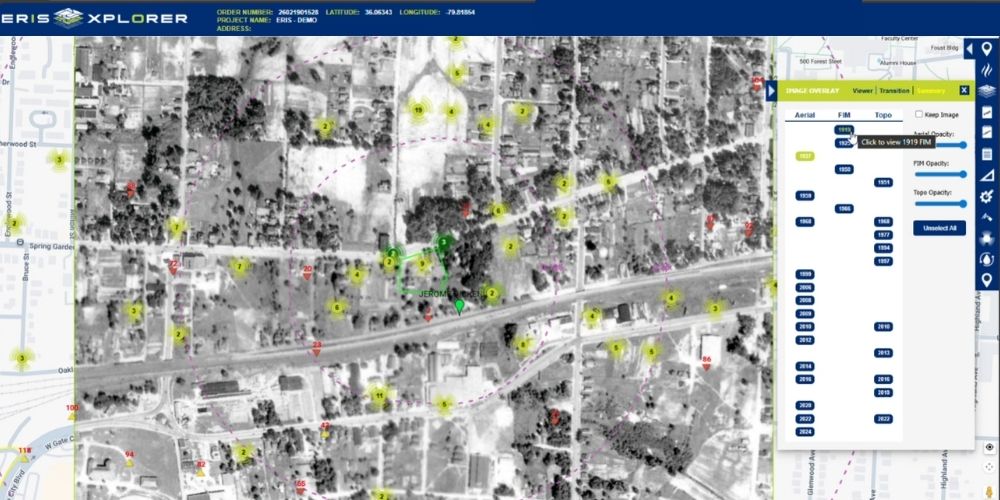
1) Image Summary table:
- Use the one-click option to clear all layered images.
- View all historical images in one organized table with a single click.
- Quickly identify data/information gaps to provide clear insights and improve the analysis process.
- Overlay multiple images for better comparison.
- Adjust the opacity to easily spot differences between layered imagery and the base map.
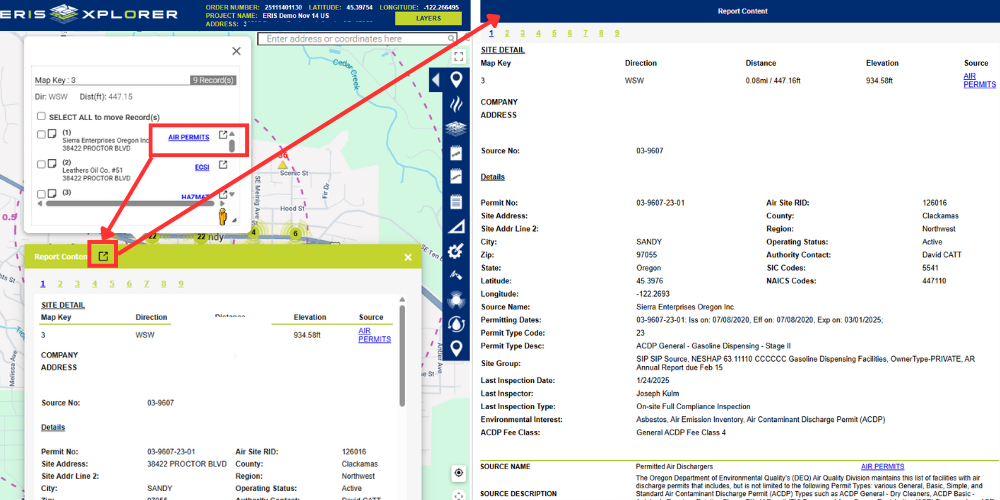
2) Open regulatory data details in a new browser window:
- View regulatory data details in a larger, more readable layout instead of a limited pop-up window.
- Access in-depth information without losing your place on the main page.
- Easily compare multiple records side by side.
- Improve workflow by reducing back-and-forth navigation.
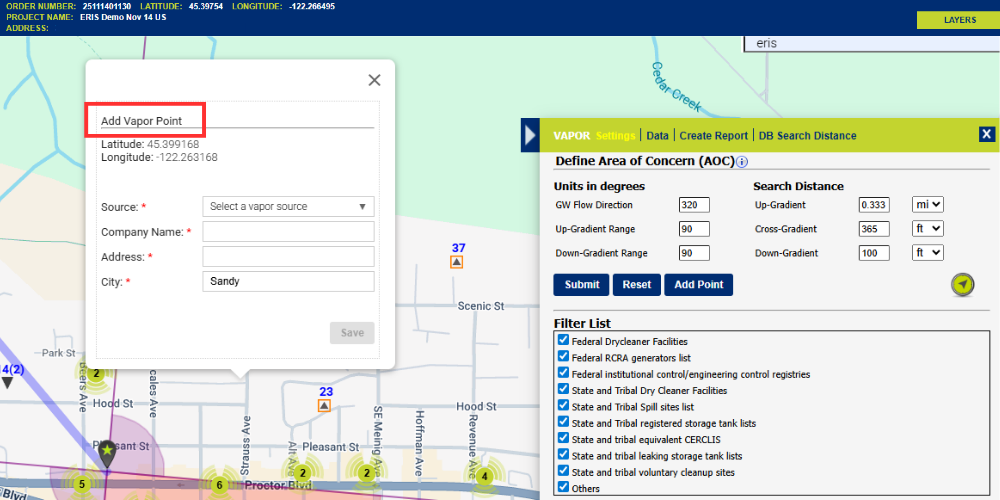
3) Add records within the Vapor Screening Tool:
- Plot records relevant to vapor risk analysis directly within the report findings.
- Select the source and input the company name – the system automatically geocodes the location and generates a map key to include the new listing in reports.
- By capturing critical vapor concerns from historical findings, field observations, and other sources, this new feature enables more complete and accurate risk documentation.
SPOTLIGHT ON
Special Profile: Nick Freeman, Director, U.S. Sales

Nick Freeman
Director, U.S. Sales
After nearly a decade with ERIS, Nick still sounds a little surprised by how quickly time has passed. “Nine fast years,” he says, though anyone who’s worked with him might guess it’s because he rarely stands still for long.
As Director of Sales, Nick brings a steady, relationship-first approach to managing key clients across the Northeast and Midwest, while also focusing on expanding ERIS’ reach with high-volume national accounts. It’s a role that blends persistence, strategy, and a genuine ability to connect. These are qualities that clients quickly notice. Whether he’s in the office coordinating outreach or on the road meeting face-to-face, Nick always represents ERIS with enthusiasm (and, more often than not, wearing a pair of ERIS-branded socks).
For Nick, one of the most rewarding parts of the job is believing in what he’s selling. With a career in sales that began right out of college, he knows that kind of conviction isn’t a given. At ERIS, he credits the strength of the product and the people behind it. He describes the culture as supportive, friendly, and reliable, built on innovation, accountability, integrity, and a fair amount of grit. It’s a team he’s proud to be part of and one he’s helping grow by mentoring newer members of the sales team.
Nick’s own career has been shaped by the strong mentors who have supported him along the way, starting with his first role out of college where he took over a sales territory from Pat Kennedy, now a colleague at ERIS. He also credits much of his continued success to the leadership and support of Jeff Doerner. Together, Pat and Jeff’s influence helped lay the foundation for a career built on trust, consistency, and a willingness to learn.
Outside of work in his upstate New York hometown, Nick enjoys spending time with his wife and two daughters, walks his dogs daily, and jumps at any chance to catch a football game, a concert, or a round of golf (he’ll be the first to tell you he’s still working on his swing). And if you’re ever trying to track him down at the end of a long day on the road, there’s a good chance you’ll find him enjoying his go-to meal: wings, fries, and a well-earned beer.
In and out of the office, one thing is clear: Nick brings a thoughtful, approachable style to everything he does, and clients (and ERIS) are better for it.
 Nick and family
 Nick and family
 Nick and family
 Nick’s dogs
 Nick and family at Disney
 Nick at a concert
 AU Football
UPCOMING EVENTS

Apr 29-30, Tucson, AZ: Meet Melissa Nelson at the Arizona Brownfields Conference.
Apr 29-May 1, Stuart, FL: Meet Jeanie Bunt at the FAEP Conference hosted by the Treasure Coast Chapter.
May 4-5, Corvallis, OR: Meet Maggie Losoya at the Oregon Brownfields Conference.
May 6-7, Las Vegas, NV: Meet Maggie Losoya at the Nevada Brownfields Conference.
May 7, Albuquerque, NM: Meet Melissa Nelson at the Albuquerque RemFest.
May 13-15, Chattanooga, TN: Meet Jeanie Bunt at the Tennessee Environmental Network Show of the South.
May 19-20, San Antonio, TX: Meet Team ERIS at TCEQ’s Environmental Trade Fair and Conference.
Jun 8-10, Staunton, VA: Meet Ashley Miller at the Virginia Brownfields Conference.
Jun 11-12, Seattle, WA: Meet Maggie Losoya at the Seattle RemFest.
Jun 16-17, Springfield, MA: Meet Cody DiMauro at BCONE’s NSCW / Northeast Sustainable Communities Workshops.
Jul 21-23, Virtual: Team ERIS will attend EBA’s Annual Virtual Conference.
Jul 21-24, Marco Island, FL: Meet Jeanie Bunt at the Annual Environmental Permitting Summer School.
Jul 30, Scottsdale, AZ: Meet Melissa Nelson at the Dō-Duck-Athon.
Thank you for reading this issue of ERIS Insider quarterly newsletter.
Our next issue will drop in July.