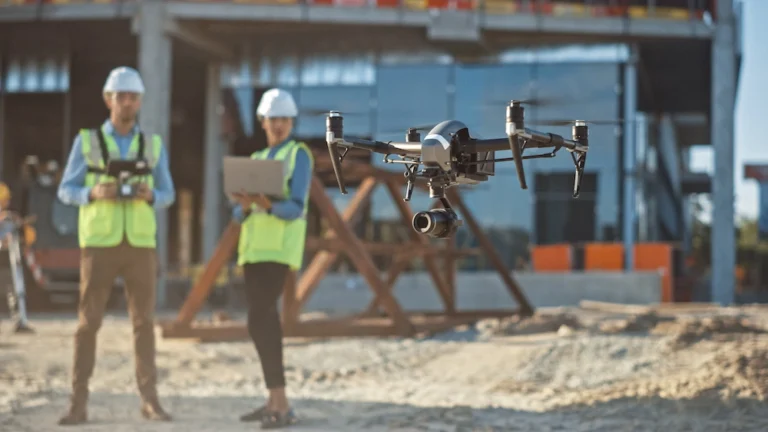


While AI adoption is widespread across banking, its use within environmental risk departments appears to remain more limited. Jim shares some of Fifth Third’s journey from early experimentation with custom models to a more practical, post-ChatGPT approach focused on generative AI as a research and decision-support tool. The conversation covers how AI is currently being used to support regulatory research, industry and contaminant analysis, and even uncovering harder-to-find information about specific properties — while stopping short of fully automated workflows.
The discussion also dives into what not to do: common pitfalls such as data security concerns, over-reliance on outputs, and the importance of verifying sources. Jim explains how thoughtful prompt design can dramatically improve results and offers practical guidance for professionals looking to get started.
Looking ahead, the episode explores the future potential of AI agents, automated screening of environmental reports, and how these tools may improve efficiency without replacing professional judgment. The conversation closes with a timely reminder: AI is unlikely to replace environmental risk professionals — but those who learn to use it effectively may have a clear advantage. A thoughtful, realistic look at AI’s evolving role in environmental due diligence; this episode is essential listening for risk managers and consultants, navigating a rapidly changing landscape.
Speakers

Jim King
Environmental Risk Manager, Fifth Third Bank
Jim King is the Environmental Risk Manager at Fifth Third Bank, with over 30 years of experience managing environmental liabilities for financial institutions. He specializes in environmental credit risk — including soil and groundwater contamination associated with commercial real estate collateral. In 2022, Jim earned a Master of Science in Data Science from Northwestern University, bringing a unique perspective on how AI and advanced analytics can transform environmental risk management.

Voice over: This Is Risk-E Business, the podcast for environmental risk and property due diligence professionals to stay up to date with industry news, the best information and the best tools.
Dave: Hi and welcome to Risk-E Business, the environmental risk and due diligence podcast. I’m Dave Colonna, Director of Lender Solutions at ERIS, and I’m pleased to be your host for today’s episode. Today we’re talking about an exciting topic, AI and how environmental risk departments can start to think about deploying it and using it.
We’re fortunate to have Jim King with us today. He’s the environmental risk manager at Fifth Third Bank. Jim, thanks so much for joining me.
Jim: Dave I’m a big fan of this podcast and I’m honored to be invited on, so thank you.
Dave: Awesome. So, I thought we’d start with maybe just a couple of stats. About 92% of banks worldwide are using AI in some capacity. Not too big of a surprise there. If we look at us, banks about 98% are using it. So again, most banks are using AI in some regard. Most of its, you know, fraud related customer service, some credit related decision making.
But again, at the end of the day, most banks are using it in some capacity. If we look at a recent survey of about 400 banks, only about 11% are using generative AI. So again, that’s decision learning obviously a little bit different than just your typical spellcheck, right. If we break that down even a little bit further, there’s no real data on this.
But my guess is that if we look at environmental risk departments at banks, it’s low. You know, one maybe 2% of environmental risk departments are using it, but you guys are in that category. So, I’d love to hear about sort of your journey and the whole entire process. When did you guys get started looking at AI and starting to use it?
Jim: Yeah. So, Dave, we’ve been working on this topic for probably over ten years now. But I look at our journey as pre ChatGPT three and post, before 2022, we looked at building models that could, uh, assist us in classifying reports or pulling data from reports running analytics on the data that we collected in our, uh, in Uconnect, which is our appraisal environmental management system.
But, you know, in retrospect, what we were thinking about then was quite limited. And the value of, of those projects, any projects we would have done, may have been positive, but probably, limited. Then in the fall of 2022, almost three years ago to the day. ChatGPT three came out and I was aware of those capabilities, that, you know, they would arrive at some point.
But I was surprised by the timing. My assumption, which was really based on predictions of people who are smarter than me about these things, was that that that kind of capability was five, if not ten years off? But, you know, there it was. And so, what that meant for our group is that we stopped thinking about building models from scratch that could pull data from environmental assessments and, you know, maybe generate a risk score or other kind of automated features like that.
It was clear that generative AI was going to swamp all those avenues for AI. And since 2023, we’ve been focused on how to use generative AI to manage environmental risk, where it works, how best to extract value from it. And of course, you know what pitfalls to avoid.
And I’d say as a group, we’re better for having used it, but we’re still learning.
Dave: Yeah. I mean it’s definitely an evolving technology. What specific tasks are you guys having it perform now? You mentioned writing and review. Can you get into just some specifics of how you guys are using it?
Jim: Well, let me let me say what we’re not using it for yet. Which is we’re not incorporating AI into our workflows, at least not yet. We’re not building agents that automate our environmental reviews or transform the way we operate. We may go there and we can discuss that later, but right now, we’re really using generative AI as a tool and still trying to figure out how to make it useful and get value from it.
And primarily we’re using it for research and to a lesser degree, writing. We find that it’s great for getting information about industries, you know, contaminants, regulations. I’ll give you a few examples. For regulatory questions, we find it’s helpful, particularly if you’re in a state that you’re not familiar with.
It’s helpful to get information about, say, whether that state has a leaking underground storage tank fund, whether it has a designated revenue stream or whether this fund is solvent. You know, all those types of questions. It can give you answers very quickly and then give you the citations and links that you can confirm what it’s telling you.
Probably the second one, the second area that we use it for research is, I find it’s just great for questions about industries and chemicals and things like that. And this is where you need to have a lot of humility as an environmental risk manager, because the truth is that none of us are experts on every single industry and every single chemical that has ever been used in the United States.
AI is a great place to start to get a lot of those basic questions answered. And then lastly, I would say, I’ll give you another one more unusual place where we’ve had some success, which is asking AI about specific properties. And in one case, AI was able to point me to websites that never would have been on my radar and even brought me to reports on the property that were, you know, otherwise wouldn’t have been available.
And so, asking AI about specific properties may be, you know, especially useful if you’re a consultant to put in to practice regularly. I think that would be kind of an interesting thing to experiment with. You might be surprised by the kind of information that AI can get you that you wouldn’t have gotten through your regular sources in the typical phase one.
Dave: Yeah, that’s interesting. And I don’t think it’s too hard to imagine that we get to a point in the near future where you’re using AI to review phase ones. Have you guys explored that at all yet?
Jim: Uh, a little bit and to, to mix results. And it takes a lot of trial and error. I don’t think we’re at the point yet where we can just throw a phase one into AI and tell us exactly what we need to get from it. But it’s getting close and we have experimented with it, and it’s key to make sure that you have the right prompts, that you know how to prompt things you can.
You can go far with just prompts and learning how to do prompts. Well just to give you an example of how to do it and how not to. I once, early on, loaded it up with a phase one and asked it whether the phase one met the ASTM 1527 standards. And it said, yes, it does, because on page three it says it meets 1527 standards.
Right? So that seems like a ridiculous answer, like, this is a this is a dumb machine, but it’s a very reasonable answer. Since I didn’t tell exactly what I wanted to do. And what you’re probably I would have needed to do. I didn’t do this, but you would have had to load up the standard into AI, load up the phase one.
Explain what you’re doing. Explain what you want it to do that you want to go through and figure out, you know what? What are all the requirements of the standard and then go and match it up with the with the document, and I’m sure somebody will be able to get it to do that. But we haven’t we haven’t gone quite that far at this point.
Dave: Okay. Yeah. You know, prompts are interesting. I think it’s an art form. It’s good to start broad and narrow it down. And AI can do a great job of getting into specifics, but the prompts are really what’s going to drive everything. And I know you have a few interesting ones.
You want to kind of share how you develop those.
Jim: Yeah, sure. I have one that is, well, I have a few of them, but I have a long version that I use very often. It’s like about a page long word document. I have pinned to Word; keep it open most of the day. And it just tells you, it explains who I am, environmental risk manager at Fifth Third.
And we’re interested in environmental issues that are going to cause problems with collateral real estate. And I go through a lot of the issues that we’re concerned about. It’s also key to say what you’re not concerned about. So, I have to specify that I’m not interested in climate risk or, uh, you know, reputational risk, some of these other risks that it may think I’m talking about and that goes on, it’s kind of wordy.
It goes on for a full page. I’ll paste that in and then say, with that background, here’s my question. And then I get pretty good responses back. It can give very good detailed and targeted answers, which is helpful. You’re not getting a lot of extra words in there.
And so, you know, that’s a sort of a trial-and-error thing. I just recommend people just, you know, take a little time and create a good prompt. Kind of what you’re interested in and, and then kind of just save it somewhere and, and hold on to it and use it. Cut and paste and put it into AI and then ask your question and then you can get some great, great answers from it.
Dave: Yeah. That’s a great explanation. So, we’ve covered some prompts. We’ve covered some lessons learned. How about pitfalls or drawbacks that you guys have experienced so far.
Jim: Well, the first thing is probably security. What we’re talking about here, we use Microsoft Copilot, which I think most of my environmental peers at other banks that are using AI are using copilot. That’s a system that still uses ChatGPT five, I believe now and, you can load up a confidential document, and it doesn’t go into some training database somewhere. They have the proper security protocols. I think for most of us, I enjoyed using ChatGPT three when it came out here at the bank for about a week, maybe before it security, you know, blocked access for everybody.
Because it only takes one – someone that’s not thinking too clearly to ask the wrong question or upload the wrong document. You got some real problems. So, we’re talking here about very secure systems, for starters.
The other pitfall, of course, is that you shouldn’t trust the outputs at face value. And that’s especially important if you’re making a credit decision. You can’t make a credit decision based on some output that a large language model gives you. You really need to click in to all the links and confirm everything from the information sources that it provides.
The nice thing though, is that it doesn’t do that for you, it doesn’t give you the links, you can put that into your prompt and then say, make sure you put all the key citations and links into your response, and it will do that. But what’s nice about it is that it gives you an answer and it gives you, sends you exactly the right spot to check it.
It doesn’t always get it right though. That’s the thing. Like it will make stuff up. It also takes a little while to understand where it tends to make mistakes. Like it’s bad at it. You know, it’s bad at fielding multiple questions at a time. At least some models are I found, there’s things like that you get a feel for where it’s going to be useful and where it has a high potential for giving you bogus answers.
But that just takes a little experience to play with and, you know, see how it develops.
Dave: Yeah. So, I think just exercising caution is a good way to move forward and be aggressive and use it. But know that there’s you got to exercise a little bit of caution while you’re doing it.
Jim: Yeah. And I’m speaking here Dave, sorry to interrupt, but I’m just speaking about specific things to environmental risk management. There’s a lot of other pitfalls about AI. And there are a lot of folks that have written about, you know, all those issues of things like, uh, what do they call cognitive atrophy?
You know, when you just, you know, you just start using that instead of thinking, there’s issues of ethics which are kind of interesting. And, you know, I encourage people to read, read that kind of stuff, but we’re trying to just focus here on the environmental risk management side.
Dave: Yeah. Speaking on the environmental risk manager’s side, are you seeing any of the consultants that you work with starting to leverage AI or are they disclosing it I guess, what are you seeing from that side of the business?
Jim: I’ve talked to a few of them about it. Most of them say they’re using it pretty much the same way we are. This also goes from my environmental peers that other banks, at least the ones I’ve talked to about it. Some, I think. Some are not using it. Some, you know, some have it blocked. But I think most folks are using it more as a tool than anything sort of transformational.
It’s a good question for consultants is because I think there are a lot of people who are very touchy about using AI, like they don’t want you to use AI if you’re doing a phase one. I’m not one of those people. I don’t really care if you use AI, if there’s a human that’s checked it and stands behind it.
But that’s one of those issues that you’re going to start seeing and in contracts, if you haven’t already. And some people just aren’t comfortable with it yet.
Dave: Yeah. And I know we’re starting to see even in some of our agreements, asking whether or not we’re using AI in any capacity. And I think it’s something that as vendors, we have to get a good handle on and understand where that question is coming from. Right.
And what type of AI that they’re looking for. But I think that’s, you know, maybe an issue that will address moving down the road, sort of in that regard. I mean, where do you where do you see this going the next five, ten years? What’s the next evolution of how you guys are using AI or that AI can be used?
Jim: Yeah, it’s a good question. Right now, you’re starting to hear a lot about agents. Those are essentially, I have this right, but essentially, you’re using generative AI, but it’s performing tasks for you too – it’s not just giving you an output. So, you could imagine a system like Uconnect as our kind of cloud-based appraisal environmental management system.
Yeah, I could imagine eventually that what would happen is someone would submit a lender, would submit an environmental assessment for us to review before he even gets to us. It would get reviewed by an agent and it would be able to establish what’s the date of the report.
Is it done by a consultant that that we’re comfortable with? Is it done by a consultant that we’re not comfortable with? Does it have any environmental concerns listed to it? Does it mention anything about tanks and dry cleaners on this property? You know it can. You can probably get an agent that’s going to go through and pull out all that kind of information, perhaps even create a risk score of some sort.
And so, all that arrives to you as a risk manager and you already have quite a bit of information already completed, then you can start imagining that factoring into policy. So, you know, maybe we get comfortable with our risk score system. We feel like we have a good algorithm for it. And we say, hey, if we have a low score, a low-risk score, and the loan is less than this amount, then maybe we won’t look at it.
So maybe that freeze frees up some time for us. We’ll see where this goes. I think we’re a way off on that. One group to look at first is to see what happens on the appraisal side, because there’s usually like three times as many appraisers as there are environmental people. So, if you’re going to do an AI project and want to get the most bang for the buck you’re probably going to look at appraisals before you look at environmental issues.
So, in some sense, we might be following their lead on, on some of the stuff.
Dave: Yeah, I think that I think that makes sense to and you know, I don’t I don’t know this for, for certain. But I would imagine reviewing AI, reviewing an appraisal compared to AI, reviewing a phase one report. It could be a little bit more straightforward, right? I mean, the math piece and the, you know, the narrative, neighborhood descriptions, things like that are probably a little bit easier to get comfortable with as opposed to calling out a wreck.
Jim: Yeah. There’s also sort of a difference in the nature of the risk that we’re looking at with appraisers, because the appraisal is always an important piece of underwriting a commercial real estate secured loan. Environmentally, usually it’s not a factor in underwriting a commercial real estate loan, except for what it is.
Most of the properties are clean, So, you can have a bot, in theory, that could help you kind of screen out those easy projects and suddenly those go away. It looks like you’ve just gotten rid of half of your volume. Maybe you even get rid of 80% of your volume, but it doesn’t mean it gets rid of 80% of your work, because I think most of us would say that the easy ones don’t take a lot of time where you really get tripped up is on the complicated ones.
And those can take, you know, weeks and months. So, you might get rid of a lot of the easier and frankly, kind of the less interesting work of the department. But, you know, the effect on things like headcount and the amount of work that you have to do may not be as great as the numbers might suggest.
Dave: Yeah. I mean, that’s a great point. And I think it brings up a topic that’s on a lot of folks minds right now, not necessarily just in environmental risk departments, but, you know, pretty much any job is being impacted by AI across the country. We’re reading about it every day. Are your thoughts that this will have minimal impact for now in terms of job security and head counts, or what are your feelings there?
Jim: Well, if we’re just sticking to environmental, I don’t see it having a massive impact. Maybe on the margins, but I don’t see it having a great impact, at least not anytime soon. Yeah, and same with consultants, too. I mean, there’s so much stuff that consultants do that you just can’t have a bot do.
I mean, I can imagine, you know, Dave, like groups like ERIS that, at some point they’re not just giving you the database reports when you order a phase one, database report and all the historical information, but it also writes a whole bunch of the history for you. And maybe you get to the point where you’re training an AI that is good at reading aerial photos and, and Sanborn maps and can really put all this stuff together.
And that’s great. And that probably saves some time and makes consultants more efficient. But you still need someone that’s going to put it all together. You still need somebody that’s going to stand behind it when there are issues, and you have a livid client; they still need a human to talk to.
And putting it all together and getting it all shipped out. I mean, it’s there’s a lot you can automate, I’m sure. But it’s going to be a long time before you’re sending a humanoid robot out to a to do a property inspection, for example. So, a lot of that more time-consuming stuff is still going to remain there, so I think it’s going to be like a lot of these technologies that makes you more efficient, but maybe not. It’s probably not taking over whole positions like you may fear.
Dave: Yeah. You had a good quote when we were prepping for the call. And I don’t want to misstate it… AI isn’t going to replace you…
Jim: It’s the line that you probably won’t be replaced by AI, but if you aren’t using AI, you probably will be replaced by somebody who is.
Dave: Yeah, I liked that. Unfortunately. We’re up against it. Are there any other thoughts that you have any sort of final thoughts or strategies that you want to share?
Jim: Well, as much as I like the quote you probably won’t be replaced by AI, but if you aren’t using it, you probably will be replaced by somebody who is, I’d like to be a little more optimistic and a little more positive. And just recommend that people dive in and try it out and get comfortable with it. I look at it as a bit like a language, and that makes me think of a book that came out a couple of years ago by Adam Grant called Hidden Potential.
And one of the chestnuts in that book was that kids pick up languages much faster than adults. But it’s not because their brains are more plastic. And, like we were told a few years ago. They pick up languages quickly because they speak more and just make more mistakes. And he profiles people who weren’t good at languages in their youth, and early adulthood.
And then later the light bulb went on and they became polyglots. These are people that could live in a country for 3 or 4 months and become fluent. And they did it by just trying and speaking all the time, almost seeking opportunities to speak and make mistakes. One guy’s secret was that he tries to make 250 mistakes every day.
And, you know, he’s picking up a language in 3 or 4 months. So, I think there’s a kind of a lesson, about learning AI from that and which is just to start asking questions of it, see what kinds of questions it can answer. And rather than get frustrated by bad answers, choose to find them interesting, you know, make adjustments and try again.
And, you know, I think it’s fun. And unlike making a mistake while talking to a local Parisian in French, you won’t suffer any public embarrassment if you make a mistake with AI. So, my recommendation is to dive in and see what it can do for you.
Dave: Yeah. Well, Jim, thanks for joining us. This has been a lot of fun. And thank you everyone for listening to the Risk-E Business podcast. Jim, once again, thank you. Much appreciated.
Jim: Dave, I’ve enjoyed it. Thank you.
Dave: To listen to more insights from ERIS, you can visit the InfoHUB at erisinfo.com which contains featured articles and podcasts and everything about environmental due diligence. Be sure to subscribe to the Risk-E Business Podcast to be notified of any upcoming episodes. And thanks again for joining in.
Voice over: This has been Risk-E Business, the podcast for environmental risk professionals. Don’t risk missing out on the latest industry news, news, technologies or advice. Subscribe now.