ERIS Insider summarizes key news items and current trends shaping the work of environmental assessment and due diligence practitioners.
ERIS Insider Sections
IN FOCUS
6PPD-Quinone — An Emerging Contaminant to Watch

While PFAS continues to receive significant regulatory attention, 6PPD-quinone is emerging as another contaminant of interest as scientists and regulators evaluate its environmental impacts.
Formed when a common tire additive reacts with ozone, 6PPD-quinone has been linked to stormwater runoff and toxicity in certain aquatic species, prompting increased research and regulatory evaluation.
Although 6PPD-quinone is still in the early stages of evaluation and not subject to widespread regulation, recent actions by the U.S. Environmental Protection Agency (EPA) and several states suggest it is a contaminant worth watching. As science evolves, property owners, developers, and environmental professionals may begin encountering new questions regarding stormwater management, permitting, and environmental due diligence related to this emerging contaminant.
What Is 6PPD-Quinone?
6PPD-quinone is a chemical transformation product of 6PPD, an additive commonly used to extend tire life by preventing rubber from breaking down when exposed to ozone and heat. However, as tires wear during normal vehicle use, tire particles containing 6PPD can enter the environment. When 6PPD reacts with ozone in the air, it forms 6PPD-quinone, which can then be transported into waterways through stormwater runoff.
Scientific research has identified 6PPD-quinone as highly toxic to certain aquatic species, including coho salmon. The research has primarily focused on ecological impacts, particularly in freshwater environments where stormwater runoff is an issue. These findings have increased interest in understanding how tire-related pollutants move through the environment and what potential management approaches may be appropriate.
Regulatory and Legal Developments
EPA has identified 6PPD-quinone as an emerging contaminant requiring additional study. Through its FY 2025–2028 6PPD/6PPD-quinone Action Plan, EPA is focused on improving scientific understanding of the chemical, including research related to occurrence, exposure, toxicity, and potential risk management approaches.
Meanwhile, states are beginning to evaluate 6PPD-quinone. Washington is among the first states to act due to concerns about the tire additive’s impacts on its salmon population. State lawmakers enacted legislation directing regulatory agencies to address 6PPD in motor vehicle tires and are evaluating potential alternatives that could reduce environmental releases of the chemical. California similarly evaluated the chemical through its Safer Consumer Products Program and continues to assess whether additional action may be appropriate. Numerous other states are participating in the Interstate Technology and Regulatory Council’s efforts to research 6PPD-quinone and provide guidance on regulatory initiatives.
The issue has also entered the legal landscape. Environmental groups have filed lawsuits against tire manufacturers alleging that companies failed to adequately address the environmental risks associated with 6PPD. In Washington, environmental organizations and fishing groups sued several tire manufacturers, claiming that the companies’ continued use of 6PPD harms the salmon population and other aquatic species. While the litigation remains ongoing, these cases reflect growing scrutiny of tire-derived contaminants and may influence how regulators, manufacturers, and other stakeholders evaluate potential risks associated with 6PPD-quinone.
Why It Matters for Property Stakeholders
ASTM E1527-21, the industry standard for conducting Phase I environmental site assessments (ESA), focuses on identifying recognized environmental conditions (RECs) associated with hazardous substances regulated under CERCLA. Following EPA’s designation of PFOA and PFOS as hazardous substances under CERCLA, those chemicals (once considered emerging contaminants) are now within the scope of a Phase I ESA. But, to date, 6PPD-quinone has not been designated a CERCLA hazardous substance and therefore generally falls outside the scope of a typical Phase I assessment. However, as scientific understanding and regulatory interest evolve, 6PPD-quinone may become, or may already be, a relevant consideration for certain properties, particularly those with significant stormwater runoff or vehicle activity.
For example, properties with higher vehicle activity levels and extensive paved surfaces may generate greater quantities of tire wear particles, which can accumulate on roadways and other impervious surfaces before being transported through stormwater runoff. As research on 6PPD-quinone continues, it may become an increasingly important consideration in stormwater management practices, permitting decisions, and evaluation of environmental risks associated with tire-derived contaminants that may be deposited on these potential 6PPD-quinone sites and adjacent properties.
As a result, property owners and developers should monitor how emerging contaminants are incorporated into future regulatory frameworks and stormwater planning. Environmental professionals may also need to consider how contaminants like 6PPD-quinone fit into broader discussions regarding environmental risk, property impacts, and long-term compliance obligations.
Questions to Consider
Although it remains too early to determine how 6PPD-quinone may ultimately be regulated, parties involved in property ownership, development, and environmental management may want to consider:
- Could future stormwater requirements affect certain property types or redevelopment plans?
- Are transportation-intensive properties more likely to face additional scrutiny as research and regulations develop?
- How might emerging contaminants influence future environmental due diligence, permitting, or project planning?
As with other emerging contaminants, early awareness of developments in 6PPD-quinone may help property stakeholders better understand potential future risks and prepare for evolving best practices, environmental standards, and regulations.
CRE MARKET UPDATE
The Latest Market Updates in the U.S. Commercial Real Estate Industry (Q1 2026)
Commercial Real Estate Volume Increases and Lending Conditions Improve
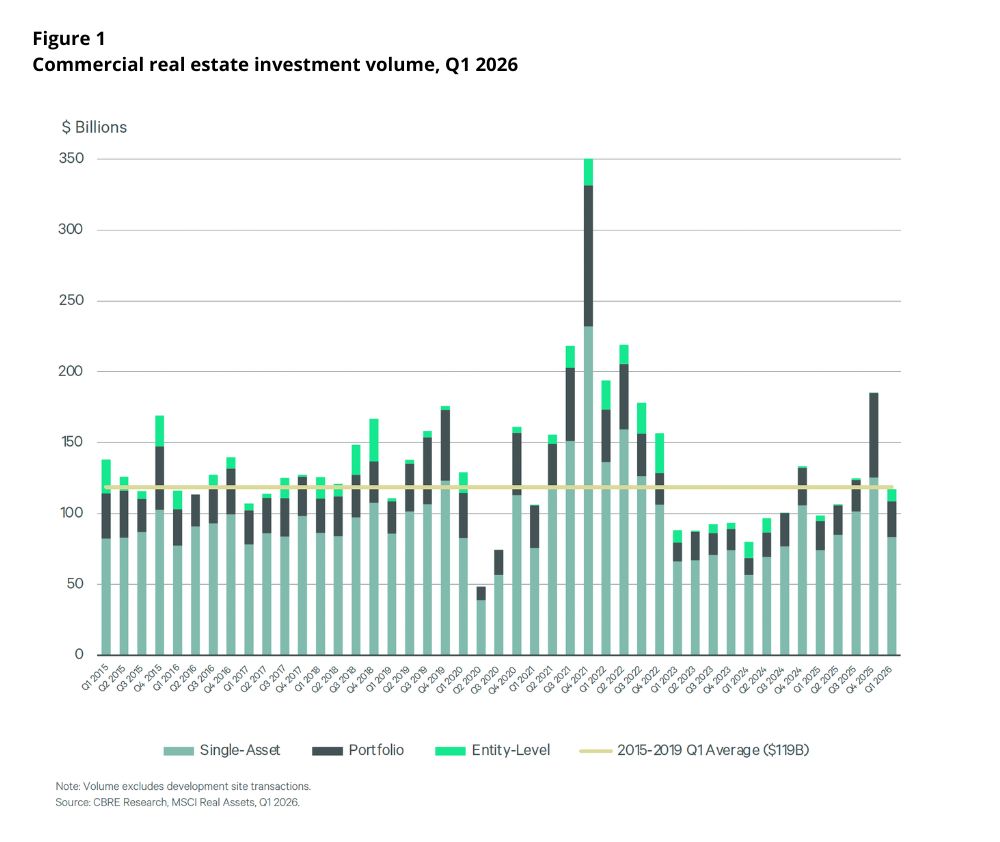
CRE investment volume increased by 19% year-over-year in Q1 to $117 billion, according to CBRE Research. Single-asset sales rose by 13% to $84 billion, while portfolio investment volume increased by 23% to $25 billion (Fig. 1).
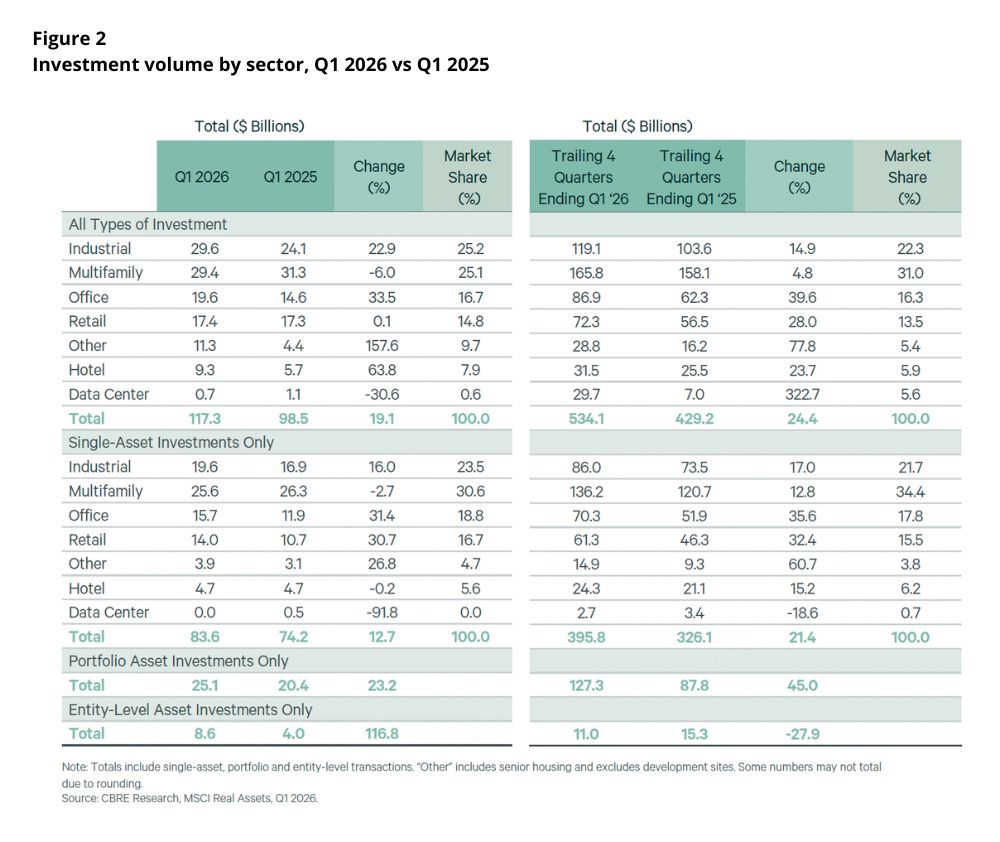
Industrial and logistics was the leading sector for investment volume with $29.6 billion in Q1, up by 23% year-over-year. Multifamily had the second-highest volume with $29.4 billion, down by 6%. Office investment volume rose by 34% to $19.6 billion, while retail investment increased only slightly by 0.1% to $17.4 billion (Fig. 2).
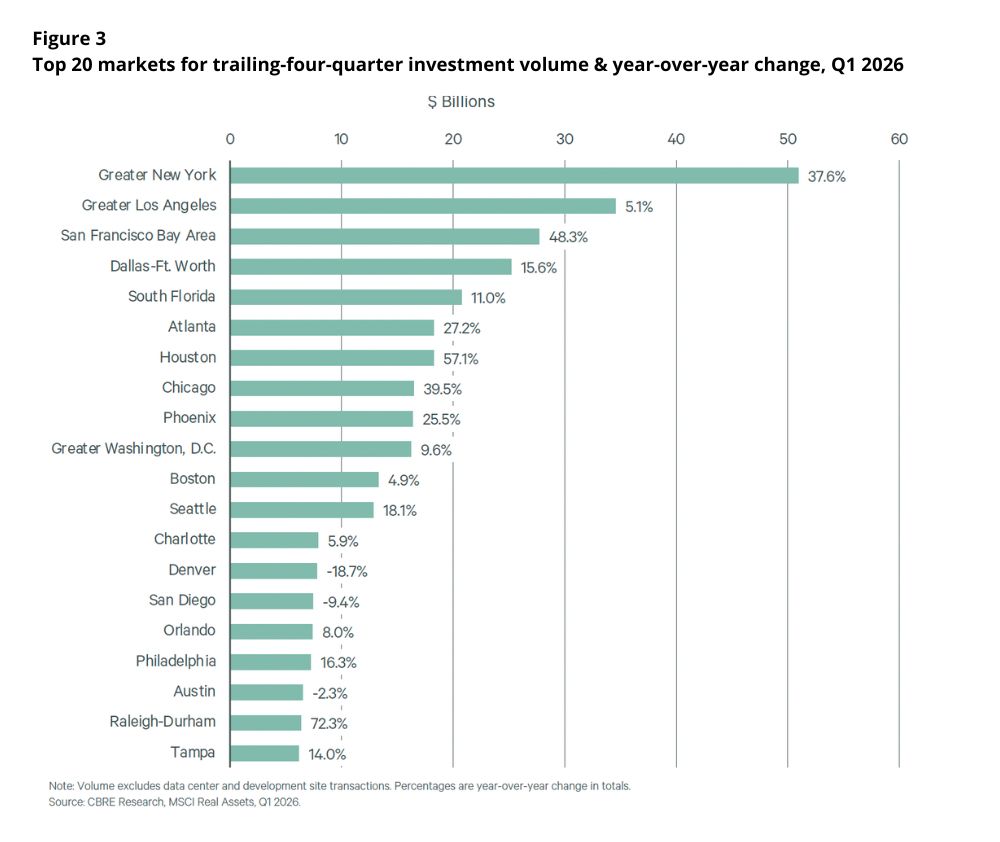
For the trailing four quarters ending in Q1, New York had the highest investment volume at $51 billion, followed by Los Angeles at $35 billion and the San Francisco Bay Area at $28 billion. Of the top 20 markets for trailing-four-quarter investment volume, Raleigh-Durham had the largest year-over-year increase of 72%, followed by Houston (57%) and the San Francisco Bay Area (48%) (Fig. 3).
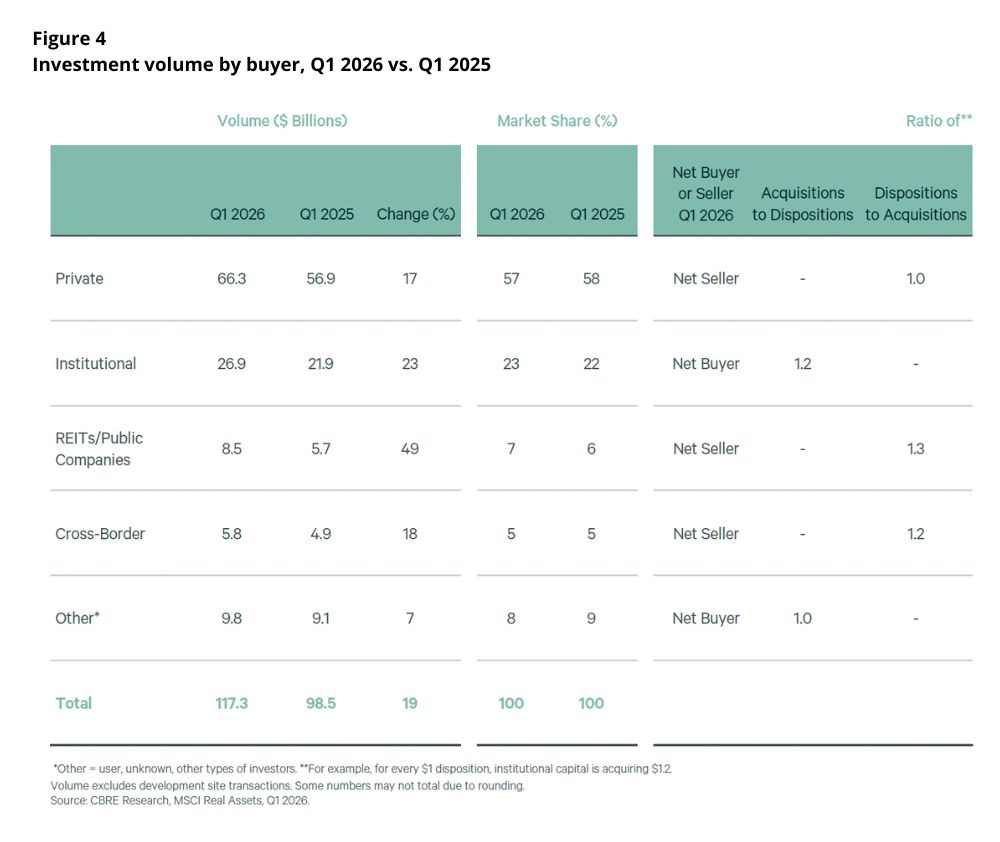
Private investors accounted for $66 billion (57%) of Q1 investment volume, up by 17% from a year ago. Institutional investment volume increased by 23% from a year ago to $27 billion, accounting for 23% of total volume. Investment volume by REITs/public companies rose 49% to $8.5 billion. Inbound cross-border investment volume increased by 18% to $5.8 billion. Institutional investors were net buyers in Q1, while private buyers, REITs, and cross-border investors were net sellers (Fig. 4).
Source: CBRE Research, Q1 2026
To view larger images and dive deeper into the data, click on the images above.
LATEST DEVELOPMENTS
EPA Announces New Superfund Cleanup Initiative, Cost Recovery Proposals
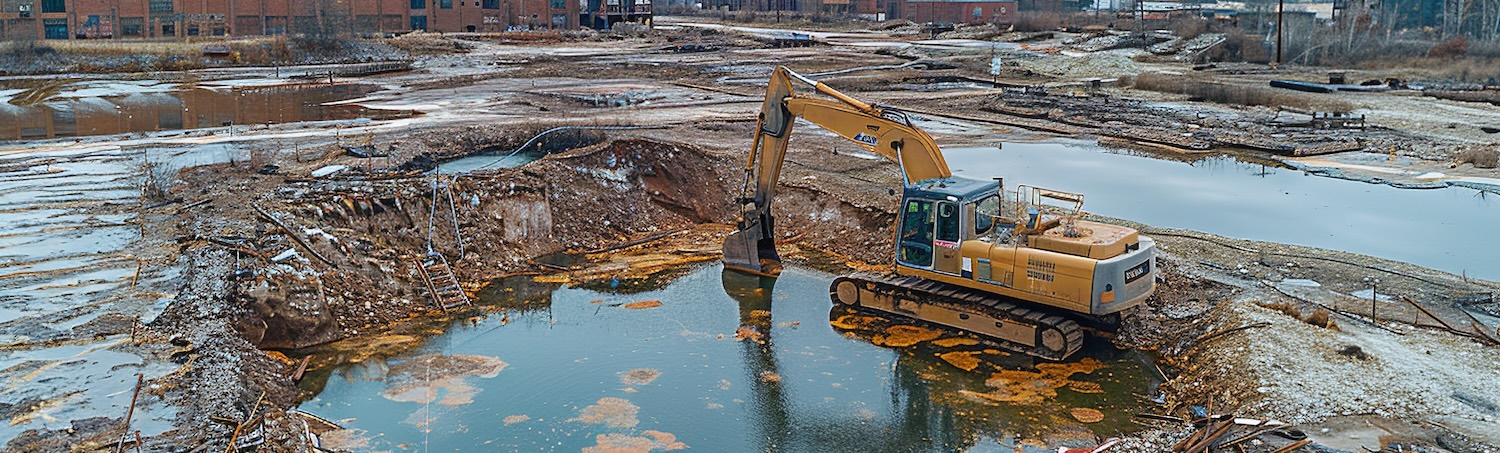
The U.S. Environmental Protection Agency (EPA) recently announced the Superfund Solutions Initiative, a new effort designed to accelerate the cleanup of contaminated sites across the country. The initiative seeks to address longstanding delays in the Superfund program by streamlining decision-making, reducing procedural bottlenecks, and expanding collaboration with state agencies. The goal is to move more sites from investigation to remediation while delivering faster environmental and economic benefits to affected communities.
Expedited Investigations, Accelerated RI/FS
The initiative focuses on three primary areas: improving project management, deploying cleanup tools and authorities earlier in the process, and applying updated scientific approaches to site evaluation and remediation. EPA plans to expedite investigations at hundreds of Superfund sites, increase environmental sampling and inspections, accelerate the development of remedial investigations and feasibility studies (RI/FS), and modernize site management practices. The agency also intends to streamline the use of contractors and evaluate cleanup options under multiple environmental programs simultaneously rather than sequentially.
In addition, EPA plans to expand cooperation with states by providing training and capacity-building resources that allow state agencies to take a larger role in managing cleanups. The initiative emphasizes the use of standardized approaches for common contaminants and site conditions, with the goal of reducing duplicative analyses and shortening cleanup timelines. EPA has stated it will provide regular public updates on its progress through existing Superfund reporting mechanisms and other agency communications.
EPA officials have described the initiative as part of a broader effort to deliver more timely cleanups and return contaminated properties to productive use.
Two Separate Superfund Proposals
Additionally, EPA proposed two regulations to clarify and streamline certain aspects of Superfund cost recovery. While the proposed rules are separate from the Superfund Solutions Initiative, they address procedures for recovering cleanup costs from potentially responsible parties and are intended to improve consistency and efficiency in implementing CERCLA’s liability framework.
EPA Shifts AI Data Center Environmental Oversight to States and Communities

The U.S. Environmental Protection Agency (EPA) recently announced it will not establish nationwide environmental requirements or recommendations for artificial intelligence (AI) data centers, instead leaving decisions regarding water use, air emissions, cooling technologies, and other environmental considerations to state and local governments.
According to EPA Administrator Lee Zeldin, environmental standards for data centers are best determined at the local level. Each facility and community faces unique infrastructure requirements and environmental conditions, Zeldin said at the recent POLITICO Energy Summit in Washington.
The announcement follows recent EPA initiatives aimed at streamlining permitting and providing regulatory guidance to support AI infrastructure development while maintaining compliance with existing environmental laws.
State and Local Developments
Without nationwide standards, state and local governments are expected to play a larger role in regulating the environmental impacts of AI data centers. Because these policies are likely to differ from one jurisdiction to another, developers may face a patchwork of state and local requirements affecting facility siting, permitting, and resource planning.
Although EPA has declined to establish new federal standards for AI data centers, developers and operators remain subject to existing environmental laws. As states and local governments develop their own policies and best practices, organizations should monitor evolving requirements and consider environmental issues early in the planning process.
SEC Proposes Rescinding Climate Disclosure Rules
The U.S. Securities and Exchange Commission (SEC) recently proposed rescinding its 2024 climate-related disclosure rules, which would have required public companies to provide extensive climate-related information in their registration statements and annual reports. (For an overview of the rules, see SEC Adopts Final Climate Risk Disclosure Rules; Issues Stay in Light of Legal Challenges.)
The rules were adopted in March 2024 but never took effect due to legal challenges. Now, the SEC argues that the rules exceeded the agency’s statutory authority, departed from its traditional materiality-based disclosure framework, and would have imposed significant compliance burdens on registrants. The rescission proposal follows the SEC’s earlier decision to stop defending the rules in ongoing litigation.
State Developments
The SEC’s proposal contrasts with developments at the state level.
Earlier this year, the California Air Resources Board adopted initial regulations implementing the state’s climate disclosure laws, establishing key definitions, fee structures, and initial reporting requirements while continuing work on additional implementing regulations. New York’s proposed Climate Corporate Data Accountability Act, modeled after California’s SB 253, passed the state Senate in February 2026 and is currently under consideration in the Assembly. If enacted, it would require large companies doing business in New York with more than $1 billion in annual revenue to disclose Scope 1, 2, and 3 greenhouse gas emissions.
And in New Jersey, policymakers continue to evaluate climate-related reporting and risk disclosure requirements. Specifically, the Climate Corporate Data Accountability Act was approved by the Senate Environment and Energy Committee and referred to the Senate Budget and Appropriations Committee. The legislation would require certain businesses with annual revenues exceeding $1 billion to report greenhouse gas emissions.
As a result, even if federal climate disclosure requirements are rolled back, companies will still face reporting obligations under certain state laws. Organizations operating in multiple jurisdictions should continue to monitor developments and evaluate their climate-related reporting practices.
STATE DEVELOPMENTS
Colorado’s Designated Renewable Energy Reinvestment Areas

A new Colorado law pairs remediation and redevelopment with clean energy investment. Signed into law on May 27, 2026, HB-1268 authorizes local governments to establish Renewable Energy Reinvestment Areas, making it easier to transform contaminated and previously disturbed properties into sites for renewable energy projects. Eligible sites are defined as brownfield sites, closed landfills, sites affected by closed mining or oil and gas operations, CERCLA or RCRA sites, or land being cleaned up under Colorado’s Voluntary Clean-Up and Redevelopment Act.
HB-1268 also modifies urban renewal and county revitalization statutes to allow tax increment financing for eligible projects while specifying that sites may be located outside the boundaries of urban renewal plans or county revitalization areas. The bill authorizes the use of those funds for any related acquisitions, site preparation (including demolition and remediation), and installation.
The law takes effect on August 12, 2026, and requires the Colorado Energy Office to publish guidance on siting, permitting, development, and technical matters.
Amendments to Florida’s Site Rehabilitation Voluntary Cleanup Tax Credit
The Florida Department of Environmental Protection has adopted amendments to Florida’s Voluntary Cleanup Tax Credit (VCTC) rules at FAC Chapter 62-788, effective May 10, 2026. The VCTC is a state program adopted in 1998 to encourage private and public entities to conduct voluntary cleanup of contaminated commercial, industrial, and brownfield properties. The amendments implement recent statutory changes and are intended to improve the application process. Changes clarify submission requirements for tax credit applications, extend the time to claim Site Rehabilitation Completion Order Bonuses by one year, and remove the requirement to consult with local authorities before claiming a solid waste removal credit. Documentation changes include a new requirement to prepare a cost summary table as part of the application. The application form has also been updated to clarify submission deadlines and align with these changes.
Indiana Modernizes UST Corrective Action Requirements
In April, Indiana lawmakers enacted legislation to streamline Title 13 of the Indiana Code, which governs the state’s environmental programs. Senate Enrolled Act (SEA) 277 modernizes statutory language, reduces redundancy, and aligns provisions with current agency structure and legal frameworks. The law also updates Indiana’s Underground Storage Tank (UST) corrective action framework, effective July 1, 2026.
Under the new law, the Indiana Department of Environmental Management (IDEM) must satisfy certain requirements before it may issue a No Further Action determination, approve closure, or require institutional controls at petroleum release sites.
In new guidance, IDEM clarifies that it must receive and review an evaluation of potential remedies where any “reportable quantity” of released petroleum remains or may remain in the subsurface. Although the statute does not define “reportable quantity” for petroleum, IDEM indicates it will rely on federal UST reporting requirements under 40 CFR 280.53 for interpretation, including spill thresholds and conditions where petroleum may persist in soil or groundwater.
Even when the volume of a release is uncertain, the presence of release-related chemicals above state cleanup levels may warrant a more detailed remedial evaluation prior to closure. This analysis must consider multiple cleanup alternatives, including cost and timeframe estimates and the potential use of environmental deed restrictions to support closure objectives.
IDEM has updated State Forms #55439 and #55441 to reflect the new requirements and may request additional information, such as pilot studies or a full Corrective Action Plan, based on site conditions.
Thank you to STP ComplianceEHS for contributing the articles under State Developments in this edition.

LENDERS’ CORNER
Higher for Longer: What It Means for CRE and Phase Is

Dave Colonna, Director, Lender Solutions, ERIS
At its June meeting, the Federal Reserve decided to leave the federal funds rate unchanged at 3.5% to 3.75%. The official statement indicated that inflation remains above the Fed’s target, and that economic activity is still expanding at a solid pace. While many expected rate cuts before the end of the year, some now project a rate increase later in 2026.
The most likely near-term scenario is that rates remain close to current levels through much of 2026, leading to a “higher for longer” interest rate environment. The debate is no longer about the timing of rate cuts but about how long current rates will persist.
This could have significant implications for commercial real estate markets and Phase I activity. While capital is available and transaction volume is improving, the pace of recovery in commercial real estate will likely depend more on long-term borrowing costs and refinancing conditions than on modest changes to the federal funds rate.
From an environmental due diligence perspective, a higher-for-longer rate environment will typically dampen transaction activity, reducing demand for Phase Is. However, the combination of a large volume of delinquencies and $875B of maturing debt has helped offset the decrease in demand.
In addition, as we’ve seen in previous cycles, higher interest rates don’t necessarily eliminate environmental due diligence demand; they shift it. Acquisition-driven Phase I volume may soften, but refinance reviews, portfolio monitoring, distressed asset evaluations, and redevelopment projects become increasingly important sources of environmental due diligence activity.
That narrative aligns closely with what commercial banks are currently experiencing: slower growth in CRE origination coupled with heightened focus on managing and monitoring existing portfolios.
PRACTICE TIP
CERCLA’s Continuing Obligations: Why a Little Extra Advice Really Matters

This edition’s Practice Tip Presented by:
Contributing Author: Michael Sowinski, J.D., VP, Terradex, Inc.
ASTM’s Phase I Standard (E1527-21) specifically excludes continuing obligations. As Section 3.1 of the standard explains: “[t]his practice does not address … continuing obligation[s].” Nonetheless, when Phase Is uncover recognized environmental conditions (RECs), important post-purchase steps may be necessary to preserve CERCLA liability protection.
Recognizing that a Phase I isn’t the last stop on the due diligence continuum, ASTM developed E2790-20, which provides best practices for meeting continuing obligations and maintaining CERCLA liability protections. Together, the standards recognize that identifying environmental conditions before acquisition and addressing continuing obligations afterward are distinct, but complementary, components of environmental due diligence.
Although continuing obligations fall outside the formal scope of a Phase I ESA, environmental professionals can provide valuable advice by helping clients understand when REC findings may trigger post-acquisition legal requirements. A brief conversation about compliance with continuing obligations can help purchasers avoid costly mistakes that may jeopardize CERCLA liability protections.
This is particularly important because courts appear to apply heightened scrutiny in determining whether a purchaser has fulfilled continuing obligations when a Phase I identifies RECs. In Ashley II of Charleston, LLC v. PCS Nitrogen, Inc., the court concluded that the purchaser failed to exercise “appropriate care,” in part because contaminated sumps that leaked had been identified as RECs during the Phase I ESA. On appeal, the Fourth Circuit described a potentially heightened standard when RECs exist. Continuing obligation requirements, if anything, should be higher, the court explained, because the contamination was known at the time of property acquisition.
More recently, the court in Old Gate Partners, LLC v. Paddock Enters., LLC, reached a similar conclusion, pointing to historical pre-purchase environmental reports that described TCA-containing tanks that remained post-purchase. With no timely steps to address the tanks, the court ultimately concluded it was more likely than not that some amount of TCA leaked into the soil after purchase, causing the purchaser to lose CERCLA liability protection.
The key takeaway? Identifying RECs is only part of the job. Environmental professionals can add real value by helping clients understand their continuing obligations when CERCLA liability protections are at stake.
For more information on continuing obligations and associated CERCLA liability protections, see Learn From the Mistakes of Others: A Review of CERCLA’s Bona Fide Prospective Purchaser Defense to Inform Winning Strategies.
ASTM DEVELOPMENTS
ASTM Fall Workshop to Focus on Disaster Resilience and Risk Reduction
ASTM’s Committee E50 on Environmental Assessment, Risk Management and Corrective Action and ARISE U.S., a UNDRR Private Sector Alliance for Disaster Resilient Societies, will host the Workshop on Collaborating for Resilience: Standards, Practice, and Partnership on October 8, 2026, in Jacksonville, Florida.
Held in conjunction with ASTM Committee E50’s standards development meeting, the workshop will examine how standards, cross-sector collaboration, and practical guidance can support community disaster resilience and disaster risk reduction. The program will include discussions on resilience-focused business practices, ASTM standards and guidance, and emerging policy and governance considerations. Participants will also have opportunities to exchange ideas and network with professionals from across the public and private sectors.
Additional information, including registration details, is available at: https://lnkd.in/ecXJ465w.
ASTM Drone Standard Moving Closer to Publication
ASTM’s proposed standard guide for the use of drones in commercial real estate assessments continues to make steady progress toward publication. First introduced in 2023, the New Guide for Drone Assessments of Commercial Real Estate (WK86230) is intended to establish a consistent framework for capturing, evaluating, and delivering drone imagery to support commercial real estate assessment and management activities.
Falling under the scope of ASTM’s E50.02 Subcommittee, the draft standard addresses an increasingly common challenge: while drones are now routinely used to document large sites, roofs, building facades, paved surfaces, and other property features, there has been no industry standard defining flight scope, documentation, or deliverables. The proposed guide introduces standardized preflight questionnaires and checklists, along with guidance on terminology, typical use cases, limitations, regulatory considerations, and expected deliverables.
Development of the guide has attracted broad industry participation, with more than 85 members and invited guests contributing to the effort. The standard is working through the ASTM balloting process and the subcommittee is making revisions in response to committee feedback. Publication of the standard is anticipated by the end of 2026.
FEATURED ERIS PRODUCT
New in Xplorer: Interactive Historical City Directory Mapping
City Directory historical data is now available within Xplorer through an interactive, searchable map interface. City directories are valuable historical data sources for identifying past occupants of buildings over long periods of time. This new functionality enables environmental consultants to investigate property history more efficiently, validate findings, and support reporting.
The City Directory layer allows users to:
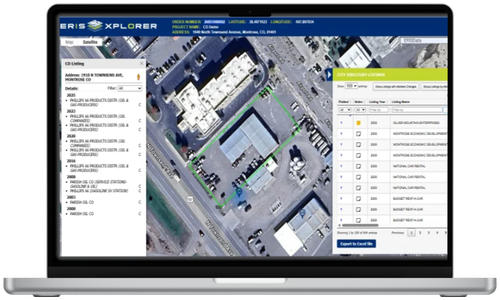
- Visualize listings spatially alongside other datasets and historical imagery, including aerial imagery, topographic maps, and fire insurance maps
- Filter and search records by multiple attributes, including distance, direction, and address, and add notes as needed
- View consolidated address histories in a single detail window, organized by year, with the option to expand content into a side panel for easier review and multitasking
- Export data to Excel and upload to Scriva, with results organized by directional relationship to the subject property
- Access Street View directly to further examine and confirm locations
This feature provides a structured way to review and contextualize historical directory information, supporting a more complete understanding of past site activity. Learn more.
SPOTLIGHT ON
Special Profile: Lacy Weeks, Client Services Specialist

Lacy Weeks
Client Services Specialist
Some career moves just make perfect sense in hindsight. After more than 20 years in the restaurant industry, Lacy Weeks wasn’t looking for a career in environmental information until a phone call from long-time friend Amanda Sugg changed everything. Amanda encouraged her to send over a resume for an open client services position, and by the end of the week, Lacy had joined GeoSearch, which later became part of ERIS through a 2020 merger. Six years later, she still calls it the best career decision she’s ever made.
As a Client Services Specialist, Lacy’s days are a fast-paced mix of answering client questions, preparing quotes, coordinating portfolio orders, supporting Regional Account Managers, and making sure clients receive the responsive service they’ve come to expect. It’s work that draws on the customer-first mindset she developed over two decades in hospitality.
“I think I bring that “teamwork makes the dream work attitude,” she says. “We really listen to our clients’ needs and find solutions that make their work lives easier.”
While she enjoys the variety of her day-to-day role, Lacy’s favorite part of the job is meeting clients in person at industry conferences. Those face-to-face conversations are an opportunity to build relationships that go beyond projects and products.
Outside of work, Lacy enjoys traveling, spending time with her husband Joey and their three miniature schnauzers: Lumpy, Georgina, and Altuve; and cheering on just about any sports team. She’s especially passionate about the Dallas Cowboys.
With her warmth, energy, and genuine commitment to helping others, it’s easy to see why Lacy has become such a valued member of the ERIS team.
 Altuve
 Lacy and her mum
 Lacy and Friends
 Georgina
 Lumpy
Lumpy Lacy in Italy
 Lacy and her husband
UPCOMING EVENTS

Jul 21-23, Virtual: Team ERIS will participate in the EBA Annual Virtual Conference.
Jul 21-24, Marco Island, FL: Meet Jeanie Bunt at the Annual Environmental Permitting Summer School.
Jul 30, Scottsdale, AZ: Meet Melissa Nelson at the Do-Duck-Athon.
Aug 4-6, Manhattan, KS: Join Garrett Rosenbaum at the Kansas Environmental Conference.
Aug 19-21, Jekyll Island, GA: Meet Jeanie Bunt at the Georgia Environmental Conference.
Aug 20, Boise, ID: Meet Melissa Nelson at the Boise RemFest.
Sep 1-3, Round Rock, TX: Meet Amanda Sugg and Lacy Weeks at the TxDOT’s Environmental Conference.
Sep 8-10, Huntington, WV: Meet Ashley MIller at the WV Brownfields & Main Street Conference.
Sep 17, Denver, CO: Meet Melissa Nelson at the Do-Duck-Athon.
Oct 1, Pelham, AL: Meet Jeanie Bunt at the Alabama Brownfields Conference.
Oct 1, Salt Lake City, UT: Meet Melissa Nelson at the Salt Lake City RemFest.
Oct 19-21, OK: Meet Garrett Rosenbaum at the Environmental Federation of Oklahoma’s Annual Meeting and Trade Show.
Oct 20, Tacoma, WA: Meet Maggie Losoya at the NEBC’s Northwest Remediation Conference.
Thank you for reading this issue of ERIS Insider quarterly newsletter.
Our next issue will drop in October.